The Most Horror-ful Time of the Year: an analysis of Christmas horror

For me, Christmas is scarier than Halloween. Everyone knows that Halloween is scary, but Christmas we’re told is the jolly, which, of course, inspires the most twisted minds….

There is something terrifying about the prospect of Christmas because it is a time in which everything is supposed to be good. It is a time of happiness, togetherness, gifts, merriment. It’s one of the best holidays in that sense. The way Christmas horror movies get you is through the distortion of purity. You don’t expect something bad to happen in that context. That’s why Christmas horror movies are especially effective and unique.

Christmas Horror Aesthetic

Filmmakers know that sound design can make or break a movie. 
Directors can take something—like “Carol of the Bells”—and contort it until it’s something out of your nightmares. 

They also know that the absence of sound is as powerful as the use of sound, and they can use silence as negative space. On a normal winter night, the only noise you’ll hear is the crunch of snow, but the filmmaker knows the scariest part is not hearing a crunch, so you don’t know where the danger is coming from.


One of the best examples of this is the original Black Christmas. Before Bob Clark directed A Christmas Story, the classic Christmas coming of age tale of 1983, he made Black Christmas in 1974. Black Christmas was one of the very first mainstream North American slasher films and was created on a very small budget. Bob Clark had to make due with anything he had, and lucky for him, he had Christmas. 

When we look at stills from Black Christmas, we see a lot of negative space. That negative space is ominous and makes a regular Christmas scene scary.   

In the first image, we see Peter, who is a red herring character and at this moment is being alluded to as a killer. So in your head, you see a killer who has been harassing these girls and ruining the Christmas spirit with all these acts of wrongdoing. And this disruption is visually shown through the juxtaposition of the Christmas tree and lights with the negative space with his body and the blackness of the night surrounding him. 

The way the Christmas horror aesthetic works is through taking something innocent and contorting it until it becomes frightening.

Santa vs. Krampus 

Santa as we know him was modeled and created in 1930 to sell Coca-Cola in the Christmas season. Because of this advertisement, the mainstream media portrays Santa as the embodiment of good, so we end up believing it. There are hundreds of movies where Santa saves the day because of this marketing, but Christmas horror upends what we see as good and what we see as bad.

In traditional Germanic folklore, Santa has a demon brother named Krampus and both figures embody justice, reward, and punishment. If you are good, Santa will give you the gifts you asked for. But on the other side of the coin, the risk with his brother is very high, and the reward is very low. If you are bad, Krampus will whip you with bundles of birch sticks and/or throw you into a bag and take you to a hellscape. In my view, Santa and Krampus are the same. 

Traditionally Santa Claus was often depicted as a pope-like or clergy-like figure—indicating that he was close to God. And Krampus was depicted as a demon/devil. Now that Santa is not associated with religion, there is no need for a devil character. So now the Santa character that we have now both punishes and does good. It’s like Krampus and Santa have become one in our popular culture.

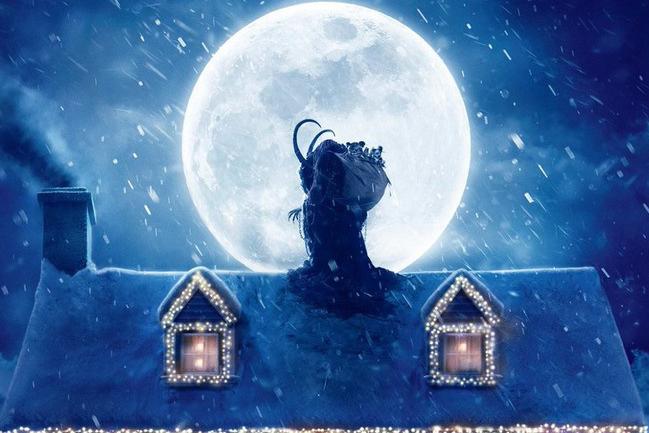
Now in modern Christmas horror, Krampus and Santa are interchangeable. They play the same role. You can look at this movie poster for Krampus (2015), you can see both iconography of Krampus and Santa to serve one purpose: to terrorize our imaginations.

What Christmas horror does is to strip the wolf of its sheep’s clothing—to reveal a darker truth: a Krampus inside the Claus

Conclusion

I’m not trying to deny the holidays are a good time, but the reason we see so many disturbing and scary stories told during this season is because of the reputation Christmas has. The choirs, the gifts, and the joy are all amazing things, but these things can also be exploited by creative minds. And that’s how you get a Christmas horror story, by twisted association. 

Kanye’s Runway (Film): Short Analysis

2020 has left me with a short attention span and no new content to analyze and review. This has led me to look at older projects from artists I enjoy. Recently, I have been thinking a lot about Kanye’s career and his magnum opus My Beautiful Dark Twisted Fantasy. Politics and controversy aside, Kanye is incredibly talented, and the vulnerability he presents in each song is unique for an artist of his status. In anticipation of his upcoming album and short film Donda, I want to a throw-back to his short film Runaway (2010), which accompanied My Beautiful Dark Twisted Fantasy.

In its simplest form, this film is about a man named Griffin who falls in love with a half-phoenix half-woman creature, who falls from the sky. I know that sounds stupid but it is a very good short film. And the reason this should be revisited in 2020 is because this film shows the strange and at times confusing mind of Kanye West. Looking at this we can see this tortured genius’ fall from media approval.

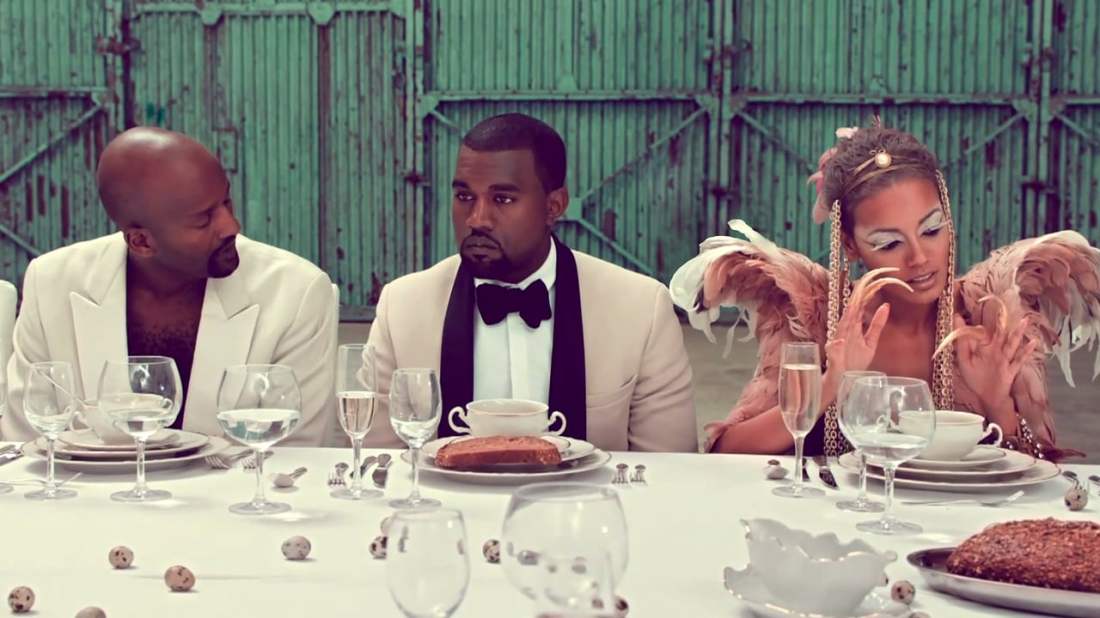
There is a lot to dissect, but I am focused on one scene from the middle that encapsulates the reading of the film. In this scene we see Griffin at a high society gathering with his girlfriend The Phoenix. The scene is shot at an angle reminiscent of the last supper. As The Phoenix picks at her food like a bird, there are a few lines of dialogue that I think are very important. The man sitting next to Griffin begins making unsolicited and condescending comments about The Phoenix. 

The man:  Your girlfriend is beautiful.

Griffin: Thank you.

The Man: Do you know she’s a Bird?

Griffin: No, I hadn’t noticed.

The Man: Like a monkey in a zoo.

After this exchange, Griffin storms off and starts playing the titular song Runaway. The most popular versions of this film begin with Kanye storming off and end when the song ends, but when we examine the whole scene we get to see the context for his behavior. 

I’ve noticed that this is a pattern with Kanye; the media only shows us the rants and the outbursts, not what precipitated them. This fits with the theme because it is about how he envisions his fame to be, his beautiful dark twisted fantasy. This shows us a lesson about Kanye—and people in general. However complicated he may be, taking things out of context will always make someone look bad. We can see Kanye as an example of the way we talk about and diminish mental health right now. Instead of supporting him, we joke and dismiss him. 

The great thing about this film is you can interpret it in any way possible. I see it as an ironic commentary on the media and perceptions of the tabloid lifestyle that Kanye ended up living when he married into the Kardashian family. In this film and album, he explores what he ended up becoming: one of the most polarizing figures in the music industry.     

Community: A Perfect Ending

WARNING: THIS POST DISCUSS SENSITIVE TOPICS READER DISCRETION ADVISED

Most TV shows go on way too long and end up being disappointing or confusing. It’s way easier  to do a bad ending than to end a show appropriately. This is why there are so many terrible finales to beloved shows. But the ending of Community is the best finale of a sitcom that I’ve ever seen. It operates on a formal level and an emotional level, and the result is a satisfying conclusion.

At its core, Community is a very meta show, and the ending stays on brand. Most of the episode takes place in a bar where the study group meets to celebrate the end of the semester and the fact that they have saved Greendale Community College. In this episode, the characters know it’s the finale, but they afraid of the future, so they play a game of imagining scenarios for a hypothetical season 7. Each character send-off is the pitch that they make for season 7, and each pitch reveals details about the characters.

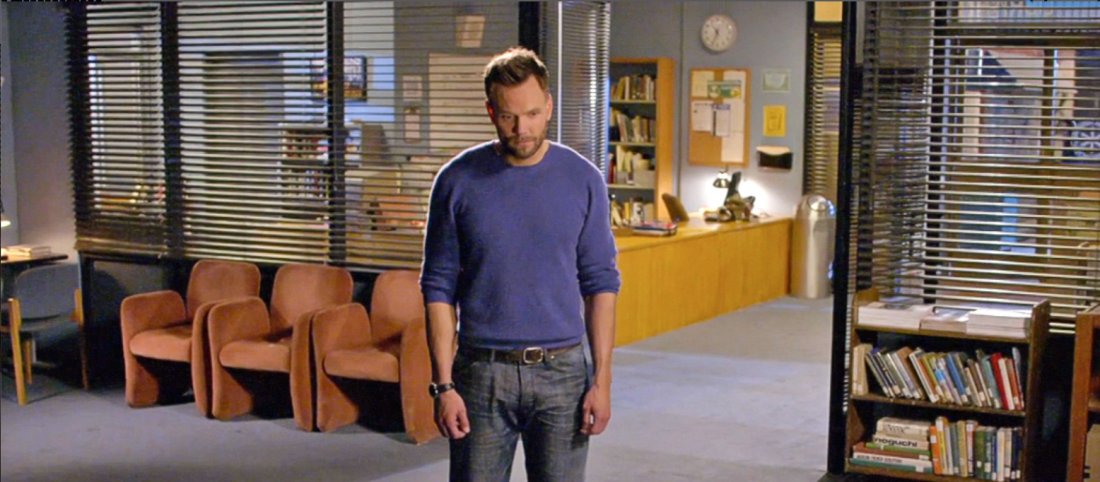
Community is very much a show about confronting morality, and this is also shown in the series finale. Behind the pitches, is the character Jeff confronting that his community is maturing and leaving. In Season 1, Jeff’s goal was to get his bachelor’s degree in law and move back to being a lawyer again, but in the finale, he realizes that he will forever remain a teacher at this community college as his community drifts away, and this really gets to him physiologically.

The meta nature of the show continues in the finale with the characters acknowledging the theme song. For such a silly show, the idea of the theme song ringing through Jeff’s head is very unnerving, and the repetition of the theme song calls into question the existence of the show itself—

“I can’t count the reasons I should stay 

 One by one they all just fade away”

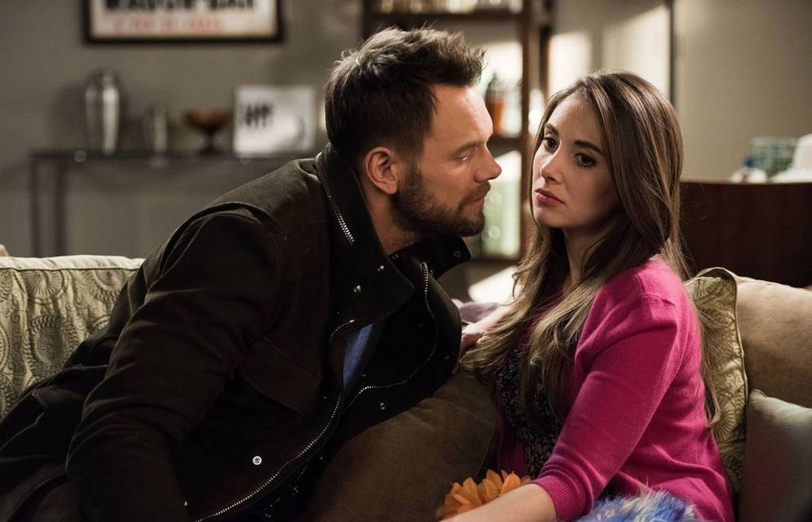
When Jeff hears that Annie is leaving, he hears the theme song ringing in his head as he imagines everyone leaving him behind and he questions the reasons he should stay and one by one they all just fade away. Jeff knows he missed his chance with Annie so when she moves he pitches to himself a world where Annie is his wife and they have a son, this dream falls apart on him when he realizes that he doesn’t know what she wants.

Community Finale: Dan Harmon on Jeff and Annie, Movie ...

Jeff realizes that even Abed—the character obsessed with being in a TV show—will leave him behind. Abed looks at life through a meta-lens, so when he moves on and develops as the show goes on, Jeff is confused and continues to see him still as the meta television-obsessed kid as he was in Season 1, but in the finale it’s clear that Abed is moving on and starting his life. 

The audience is a character in most sitcoms, and at the end of most sitcoms, it often feels like you as an audience member are being left behind while the characters go on to do bigger and better things. But with Community, it is the character Jeff that gets left behind while the audience and other characters move on and move forward. 

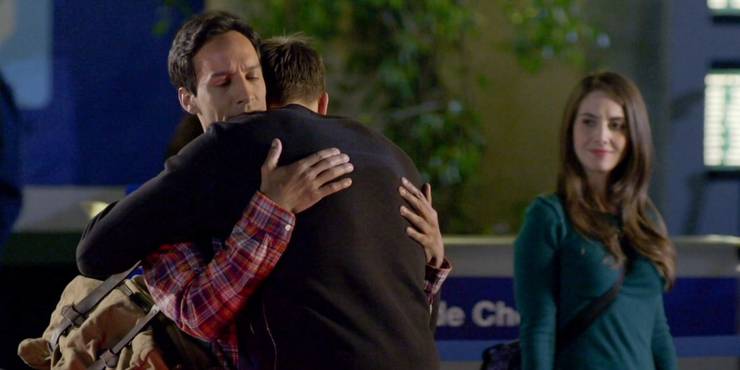
Their work is done, and Jeff realizes that he will be the last to leave and move on. The last thing  that Jeff says to all his college friends is “I love that I got to be with you guys, you saved my life and changed it forever. Thank you.” Even though this is Jeff’s last verbal statement when he is saying goodbye to Abed and Annie at the airport, he hugs Abed twice, and I believe this is his way of saying thank you. In the pilot, Abed invites everyone to the study group and tricks Jeff into becoming a better person. Because of this, Jeff owes his life to Abed. In the first episode, Jeff dismisses Abed and wants him to leave in the finale he is thankful he stayed. When we first encountered Jeff, he was a terrible and manipulative person, but through the study group has a grown to be a better person. 

5 Times Community Was Heartwarming (& 5 Times It Was Sad)

And the song that plays in the last scene shows Jeff wanting time to stop and for the show to go on. 

“Oh, there’s a river that winds on forever

I’m gonna see where it leads

Oh, there’s a mountain that no man has mounted

I’m gonna stand on the peak

Out there’s a land that time don’t command

Wanna be the first to arrive

No time for ponderin’ why I’m-a wanderin’

Not while we’re both still alive”

Jeff’s dilemna is a mirror of creator and writer Dan Harmon’s internal state. The episode tag is a commercial that displays the cynical view that life is a game and that we are not created by God but instead by a cosmic joke. The discretionary warning, voiced by Dan Harmon, quickly turns into a meta-emotional-breakdown.

Dice not included, some assembly required. Lines between perception, desire, and reality may become blurred, redundant, or interchangeable. Characters may hook up with no regard for your emotional investment. Some episodes too conceptual to be funny, some too funny to be immersive, and some so immersive they still aren’t funny. Consistency between seasons may vary. Viewers may be measured by a secretive obsolete system based on selected participants keeping handwritten journals of what they watch. Show may be cancelled and moved to the internet, where it turns out tens of millions were watching the whole time. May not matter. Fake commercial may end with disclaimer gag which may descend into vain Chuck Lorre-esque rant by narcissistic creator. Creator may be unstable. Therapist may have told creator this is not how you make yourself a good person. Life may pass by while we ignore or mistreat those close to us. Those close to us may be those watching. Those people may want to know I love them but I may be incapable of saying it. Contains pieces the size of a child’s esophagus. —Dan Harmon (last scene of Community)

This ending takes the sitcom mold and snaps it with the inevitability that time will move on. As I realize that I have to move on and grow up, I identify with this ending greatly. You make friendships and relationships over a few years and then you have to move on. My favorite endings are bittersweet endings because they replicate the bittersweet qualities of life.

In the end, life goes on.

#sixseasonsandamovie

Best Of Worst Of: Community

TV shows are uneven, and at certain moments, the quality dips. If someone turns on the TV and happens to catch a bad episode, they’ll be turned off to the whole show, and vice versa. I want to analyze this phenomenon and compare the best and worst episodes of the same show to demonstrate how wonderfully inconsistent TV can be. 

Community ran from 2009-2015, and it always stood out as a subversive parody of sitcoms. Many episodes went over budget to the point of cancellation in 2014 before the show was revived by Yahoo Screen in 2015. The show stars Donald Glover, Joel McHale, Danny Pudi, Alison Brie, Yvette Nicole Brown, Gillian Jacobs, Ken Jeong, Jim Rash, and Chevy Chase. This show takes place in a Colorado community college but it is actually a parody and study of the tropes of the TV and film that came before it. In this inaugural edition of Best Of / Worst Of,  I will be comparing “Remedial Chaos Theory” (best episode) and “Intro To Felt Surrogacy” (worst episode), two drastically different episodes in quality.  

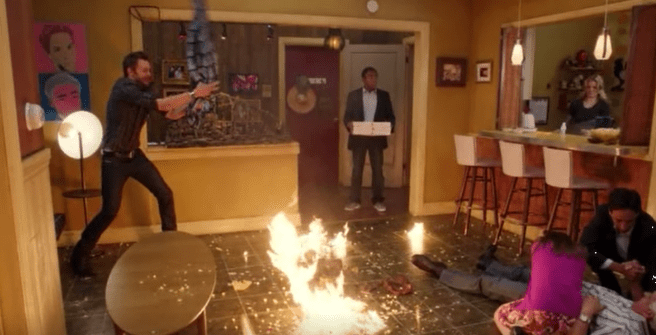
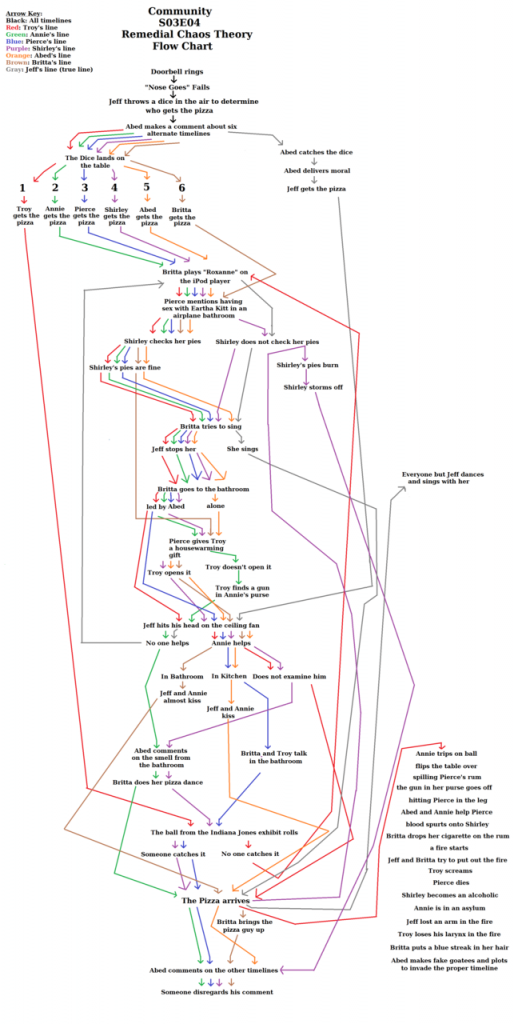
“Remedial Chaos Theory” (S3E4) is brilliant. It is about a housewarming party for characters Troy and Abed, but when the pizza is delivered downstairs, Jeff throws a die to see who will answer the door, and the story splits into six different timelines. In every timeline (except for the sixth), we see little inconsequential details that all blend together, and in the sixth and darkest timeline we see these details come together in such a way that everything that could go wrong, does go wrong. This creates many Chekhov’s guns that fire in various other timelines. It is a masterclass in storytelling. It is a shame that an episode like this was not appreciated at the time of release. This episode is a 10/10.

The central message of the episode might be that we are all operating within a framing device 

https://www.pinterest.com/pin/162059286561202756/

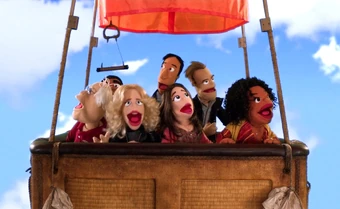
“Intro to Felt Surrogacy” (S4E9) is terrible. It is about the study group experiencing an awkward moment. When the dean notices that they are behaving strangely around each other, he makes them participate in puppet therapy, and a Sesame Street-style puppet show starts. They go on a hot air balloon for some strange reason and crash, eat drug berries in the jungle, and tell each other their darkest secrets. In the end, nothing changes. It’s alarming how this episode has no logical plot and just seems to be an excuse for Community to do a puppet episode. This is one of the worst episodes of television history. This episode is a 4/10.    

Intro to Felt Surrogacy | Community Wiki | Fandom

Community is usually very good, but if you watch “Intro to Felt Surrogacy” you will not be impressed. This is true with all television and it is fascinating to see the differences between a good episode of television and a bad episode of television. “Remedial Chaos Theory” (Best Of) and “Intro to Felt Surrogacy” (Worst Of) are the perfect examples.

Quarantine Binge List

In 2020, we need entertainment more than ever before because of the truly insane events occurring at this moment. We need entertainment to distract ourselves from the terrible things happening in the world and to inspire our creativity to get through these tough times. I want to give you an escape, so I edited together a quarantine binge watching list to help you escape and most importantly to entertain you in this time of need.

COMEDIES

Birdman: or the unexpected virtue of ignorance

An actor will try anything to revive his career 

The Disaster Artist

The true story of the making of The Room—the worst movie of all time

Keanu

This comedy about a kitten kidnapped by a gangster ends up exploring cinematic stereotypes

Popstar: Never Stop Never Stopping

A mockumentary documents the life of a popstar named Conner4real 

Tropic Thunder

A group of actors film a movie, but when fact and fiction are blurred, they don’t realize if the bullets being fired are fake a real  

The Truman Show

A child is adopted by a TV studio and realizes his life is a lie

HORROR

28 Days Later

A man wakes up after 28-day coma, and everything has changed

2001: A Space Odyssey 

A mind-bending experience about human’s first real stride into space

The Alfred Hitchcock Collection

Five of Alfred Hitchcock’s most iconic films: Rear Window, Vertigo, North by Northwest, Psycho, and The Birds

Alien

Space crew stuck on a ship as an Alien takes them out one by one 

Aliens 

The remaining survivor from that ship leads a group of Marines to the theorized last pod of Aliens 

Candyman

Someone investigating an urban legend gets lost between fact and fiction when her terrifying research subject materializes

Evil Dead

A cabin in the woods is invested by Deadites (zombies)

Evil Dead 2

A redo of Evil Dead except with slapstick humor  

Get Out 

A young black man goes to visit his girlfriend’s white family, and events take a turn for the worse 

Halloween 1 & Halloween 2018

Babysitter survives a killing spree on Halloween, and she has been waiting for the killer’s return for 40 years

Jaws 

A shark plagues the coast of Amity Island 

The Lighthouse (2019)

How crazy would you go if you were quarantined on an island with someone you despise? 

Midsommar

After something traumatic happens, a woman goes on a trip with her friends to Sweden, but events take a sinister turn, and the locals turn against her 

Nightcrawler

A very productive and strange person gets hired by a news program to drive around LA with a camera with the motto, “If it bleeds it leads” 

Nightmare on Elm Street

Don’t fall asleep, or dream demon Freddy Krueger will kill you in your dreams (and in real life)

Nightmare on Elm Street 3: Dream Warriors 

The one survivor of Freddy’s killing spree becomes an intern at a hospital, and when patients start talking about someone in their dreams, she finally comes to terms with her past  

Ready or Not
Every time someone marries into this family, they have to draw a card, and, of course, our hero Grace draws the hide-and-seek card, which starts a hunt for her head  

REC

A camera crew catches an outbreak in an apartment complex

The Sixth Sense 

A kid has the ability to see dead people and develops a special relationship with his psychologist 

Scream Franchise (sadly including Scream 3)

This meta franchise investigates whether or not the media is responsible for real-life violence

The Shining 

The worst-case scenario for a family in quarantine  

The Thing (1982)

My personal favorite movie. A research team is trapped in Antarctica, and suspense grows as anyone could be a shape-shifting alien  

Trick or Treat

A set of stories on Halloween are strung together by a murderous entity named Sam

Unbreakable 

A man survives a train crash and then finds out he is, in fact, Unbreakable 

Us

A family is going to santa cruz but a secret about the mother comes out and it ruins this vacation

Wes Craven’s New Nightmare

When the crew of a new Freddy film starts dropping like flies, it is back to the drawing board and a new script is drafted, but the scenes written start happening in real life

The Village 

An entity stalks an old-timey village, but there is something more sinister at play  

GUILTY PLEASURES

Freddy’s Dead: The Final Nightmare

Fully embraces the camp of the Freddy franchise. It’s not good, but it’s still better than Nightmare 5

Halloween 6

Takes everything good about the original Halloween films and replaces it with curses and cults. It’s still fun to watch. (The producer’s cut is bearable) 

Killer Clowns from Outerspace

The highest quality film in the “Guilty Pleasures” section; the title says everything

The Room

The best worst movie of all time. This is a transcendent viewing experience

Spider-man 3

A convoluted story with three different villains, this movie is truly so bad it’s good  

ACTION

The Dark Knight 

The most mature Batman story that has ever been told

Django Unchained

The titular character, Django, is freed by a bounty-hunter and joins him to free his wife and get revenge. Amazing performances by Jamie Foxx and Christoph Waltz

Inglourious Basterds

Not a traditional action movie, this film focuses on an alternate timeline of WWII. It has Quentin Tarantino’s smart and witty dialogue and is very entertaining  

Spider-man 1 & 2  

These movies are entertaining, and they humanize Spider-man in a way that has never been seen before in an action movie

Spider-man: Far from Home

This is a self-aware commentary on fake news and how convoluted the Marvel cinematic universe has become. It’s the best MCU movie because it acknowledges how messy the timelines have become

Spider-man: Into The Spider-verse

Truly entertaining and a technical marvel, this film is a big step towards racial equality and representation in cinema

DRAMAS

12 monkeys

A man goes back in time to stop a virus 

BlacKKKlansman 

A true story of a black man going undercover as a member of the ku klux klan

Forrest Gump 

America in the 60s and 70s, as told from the perspective of a disadvantaged man with big dreams

The Godfather 1 & 2

Deep insight into a crime family  

Joker

A man shunned by society finally snaps.  

La La Land

Two people with big dreams realize that it may be too late for them

Once Upon A Time In… Hollywood

The story of a washed up actor trying to rejuvenate his career  

Parasite

A family is secretly living in the same house as one of the richest families in Korea

Pulp Fiction

Four stylized stories linked together by one nonlinear narrative 

Reservoir Dogs

When a perfect crime isn’t so perfect

Whiplash

A student’s desire to be one of the great drummers of the 20th century turns into an unhealthy obsession.  

TRIGGER WARNINGS

Clockwork Orange – Horror

A group of teenagers wreak havoc on the city of London until the consequences catch up with them   

Deadpool – Comedy action 

A fourth-wall-breaking superhero movie starring the titular character Deadpool

Horrible Bosses 1 – Dumb Comedy 

Three friends really dislike their bosses (and attempt to murder them)

Looper – Action

An assassin goes back in time on a hit job only to find out the target is himself

Superbad – Comedy 

Three bros buy alcohol for the last high school party of the year 

This Is The End – Comedy 

A Hollywood party gets interrupted by the apocalypse 

The Wolf of Wall Street – Comedy 

A true story of Jordan Belfort’s rise and fall to power

TV

Breaking Bad – Drama

A chemistry teacher diagnosed with cancer starts cooking and selling meth

Brooklyn 99 – Dumb TV

Like the Office except goofier and set in a police station 

Dexter – Horror dramedy 

A serial killer that kills terrible people happens to work for the police department 

Jim & Andy: The Great Beyond – TV Documentary 

Shows how Jim Carrey outlandishly became Andy Kaufman in his Golden Globe winning performance 

Key & Peele – TV

Keegan Michael Key and Jordan Peele star in this socially aware, Emmy-winning sketch show.

Killing Eve – drama

Explores the obsessive relationship between an M15 officer and a  psychopathic assassin

The Office (unfortunately with Season 8) – TV

Shows how outlandish and crazy personalities react in a mundane place

Ozark – Drama

If you could disappear would you? This Netflix original series analyzes the new American Dream 

Parks and Recreation – Comedy

The Office except from the perspective of bureaucratic idiots with big dreams

The Twilight Zone (Both 1959 and 2019) – Horror

Socially aware scifi/horror anthology  

THE MASTERPIECE ZONE 

Alien

The Alfred Hitchcock Collection

Birdman: or the unexpected virtue of ignorance

Get Out

Halloween 

Inglourious Basterds

Key & Peele

The Lighthouse

Nightmare on Elm Street

The Office 

Once Upon A Time In… Hollywood

Popstar: Never Stop Never Stopping

Pulp Fiction

The Room

Scream

The Shining

The Sixth Sense

The Thing

Truman Show

The Twilight Zone

Unbreakable 

US

The Wolf of Wall Street

A Study Of The Academy’s Bias Against Horror

When Louis B. Mayer founded the Academy of Motion Picture Arts and Sciences in 1929, his goal was to create an unbiased, all-inclusive award show in the spirit of film. Unfortunately, the Academy Awards have not been inclusive and are political and biased. The Academy consistently votes for comedies, dramas and musicals, but the one genre they don’t recognize is horror. Year after year, countless dramas take home the big awards, but when a horror film wins, it is like a lunar eclipse. People have ignored horror because of its camp-filled roots and that precedent needs to expire because the horror genre has come a long way as an art form since the 1980s.

Horror has evolved, but the Academy has not

Many people think that horror is just an excuse for blood, but it’s actually a way to convey emotions, create allegory, and evoke the feeling of dread. A film like The Shining is truly a work of art and shows a deep understanding of important themes like privilege, domestic violence, and addiction. The Shining provides a different experience for everyone who watches it; it means something different to everyone because of how open it is for interpretation. However, the mainstream media tends to think of horror films as being uncomplicated stories of a killer murdering dumb teenagers for no reason until “the Final Girl” outsmarts the killer and ends up killing him. That preconception has its origins in cheesy 80s movies, but modern horror has evolved as a new way to tell stories in a metatextual fashion. In the last twenty years, filmmakers in this genre have proven their ability to shed light on issues that have been largely ignored by mainstream cinema. Issues like racism, sexism, and assault are depicted in these films in order to evoke terror in the audience by showing how twisted the real world is. Meanwhile, the Academy has shown no interest in even acknowledging these issues by instead honoring films like Green Book, in which a white man is portrayed as a hero and saves a black man. Horror has evolved, but the Academy has not. Moreover, when horror occasionally wins at the Oscars, there is always a catch. 

When Horror Movies Do Win

When horror movies do end up winning, it is almost always for awards like “Best Costume Design” or “Best Visual Effects.” According to storiesforghosts.com, 10 horror movies have won effects or costume-related awards. Every single year dramas win other more prestigious awards, which reveals bias. The only horror movie to win an Academy Award for Best Picture was the 1991 classic The Silence of the Lambs. That was 29 years ago. We need to understand that this is a genre that has and will be used for telling masterful stories. In today’s society, a movie about a failing marriage (Marriage Story) gets nominated six times, but a movie about racial profiling told as a story of a family going to Santa Cruz (US) gets no nominations simply because it belongs to the horror genre.

What Was Snubbed 

At the most recent 2020 Academy Awards, The Lighthouse (a horror film) was nominated for achievement in cinematography but lost to 1917, an action film. In my opinion, The Lighthouse was cinematically brilliant and deserved this award, but the real problem was that the 2019 film US was totally snubbed at the Oscars. The film entails the story of a family going on a vacation to Santa Cruz California. Once they arrive, a dark secret about the mother (Lupita Nyong’o) is revealed when doppelgangers of her family emerge hellbent to kill them. On the surface level, this film is a scary bloodfest, but on a deeper level, it serves as a story of distrust, acceptance, and guilt, and suggests that we are our own worst enemy. It appears that when it comes to horror, the Academy does not pay attention to the nuances and small details. US was not nominated for any Academy awards, even though the writing exceeds levels of metatextuality last tapped into in the silver age of horror back in the ’90s. Lupita Nyong’o’s performance is masterful and very impressive; she plays two different people: the mother and her doppelganger. These two performances are vastly different, and Lupita Nyong’o portrays these characters in such a brilliant way that it is unfathomable she was not nominated for an Academy Award. This demonstrates that an amazing performance in a horror movie will be overlooked for an award because of institutional bias. But the neglect of horror by the Academy does have some logic to it. 

On the other hand

The Academy members are aging out, and this helps us understand their bias against horror. According to hollywoodreporter.com, the average member of the Academy of Motion Picture Arts and Sciences is 62 years old. According to health.harvard.edu, the prime age of memory for a human being is your 20s. Why is this important? When the average member of the Academy was in their 20s, horror was sexually explicit, gore obsessed, and terribly written. With this in mind, it is easy to understand the Academy’s prejudice against the horror genre. Now horror movies have evolved, but the memory of films like The Slumber Party Massacre (which is objectively bad in terms of writing, direction, and acting) have understandably left a bad taste in the Academy’s mouth.  Horror definitely has a bad reputation, but it’s the Academy’s job to keep up with the times and give awards to movies that deserve recognition and represent the changing culture of film and the world. 

Conclusion 

Ultimately, the horror genre has been neglected for too long and deserves more recognition from the Academy of Motion Picture Arts and Sciences for the artform that it is. Using horror, filmmakers can tell inspiring and important stories that transcend the confines of traditional storytelling—movies that could not be made if it was not for the artistic brilliance of allegory. As an audience, we have to support independent projects because if the Academy won’t, then it falls on our shoulders to let storytelling be accessible to anyone who wants to say something important. In addition, the best way to get important ideas into the mainstream conscience is via the art of film. The horror genre does this in the most skilled way because audiences don’t realize they have received this message since it is so cleverly masked. The Academy of Motion Picture Arts and Sciences should give horror the attention it deserves, but in reality, it is not about the award, it’s all about the experience. In the immortalized words of Alfred Hitchcock, “Give them pleasure. The same pleasure they have when they wake up from a nightmare.”

The Office Analyzed: Season 2

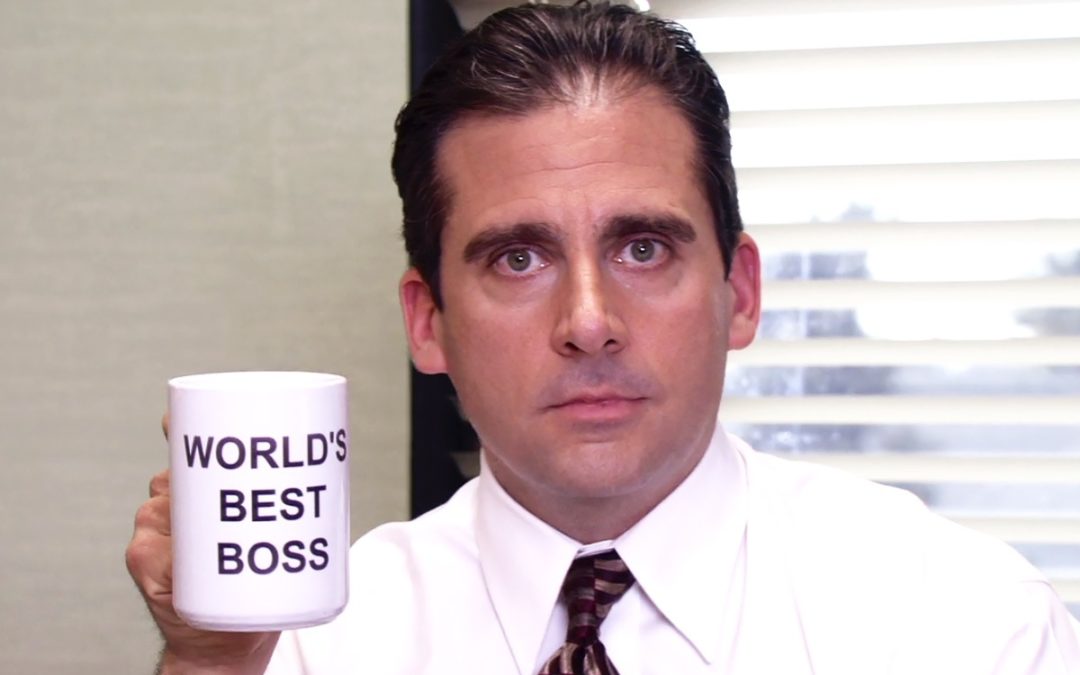
In Season 2, The Office finally finds its groove. You can think of Season 1 as a six-episode mini-series, and Season 2 as when The Office (U.S.) really begins. The writers responded to fair criticism of Michael Scott’s character and the bleakness of the work environment. British audiences could handle something that depressing, but American viewers demanded something more light-hearted. Thus the writers reimagined the character of Michael Scott with two rules: 1) make Michael 10% more likable and 2) make the other characters treat Michael 10% better. The result is a successful character makeover which is also apparent in the way Steve Carrel is styled. In season 1, Michael has a combed back stringy hairdo, a fake bald spot, and a tightened collar that creates an appearance of a double chin, but the rest of his clothing is oversized to make him appear overweight. But in Season 2, his hair looks great and his clothes fit him well. This makeover is also in the writing, his character takes on greater dimension. This is evident in certain episodes like “Office Olympics” (S2, E3) when Michael goes out to buy his condo, the rest of the office plays games while he is gone. Jim hosts a closing ceremony and awards Michael with a gold metal for closing the deal on his condo. The last shot of the episode is Michael crying because he thinks he is finally being recognized for all his hard work he has done for the Dunder Mifflin Scranton branch. And at this moment the ensemble cast recognizes Michael as their leader.

The ensemble cast is what holds this show together, they are witnessing Michael grow just like the audience. Just like Michael the ensemble develops as a whole and gels with each other to propel many storylines further later in the show. Even though I find Michael’s maturation to be the most interesting element of the series, Season 2 is mostly focused on the love story between Jim and Pam with the antics of boss Michael Scott gluing the story together. Michael has a strange experience with his superior Jan Levenson, which damages both careers. This is very recognizable in the standout episode “Casino Night”.        

 In the episode, “Casino Night” the whole story of season 2 crescendo into a laugh filled heartwarming season finale. This episode continues Michael and Jan’s relationship, Jim Confesses his love for Pam, and gambling related antics happen. This episode is the beginning of a drama filled love story that is continued in season 3, this episode reinforces the new Michael as a “Hero”. This episode is summed up by something Michael says, “Love triangle. Drama. All worked out in the end, though. The hero got the girl.”  

In my mind there are no bad episodes of Season 2, but here is my ranking:

22) The Carpet (S2 E14)

21) The Secret (S2 E13)

20) Michael’s Birthday (S2 E19)

19) Take Your Daughter To Work Day (S2 E18)

18) Performance Review (S2 E8)

17) Valentine’s Day (S2 E16)

16) Boys and Girls (S2 E15)

15) The Fight (S2 E6)

14)  Dwight’s Speech (S2 E17)

13) Christmas Party (S2 E10)

12) The Fire (S4 E4)

11) Sexual Harassment (S2 E2)

10) The Client (S2 E7)

 9) Office Olympics (S2 E3)

 8) Booze Cruise (S2 E11)

 7)  Drug Testing (S2 E20) 

 6) Conflict Resolution (S2 E21)

 5) Email Surveillance (S2 E9)

Michael realizes that he can read his employees emails and sees that he was not invited to Jim’s barbecue. Also Michael does improv with Ken Jeong.

4) Halloween (S2 E5)

Michael has to let someone go by the end of October, of course Michael waits until halloween. Michael fires someone in costume.

3) The Dundies (S2 E1)

Michael hosts an award show for his employees and he crosses the line. This is the first time Michael is humanized by having hecklers make fun of him and you actually feel for him.

2) Casino Night (S2 E22)

This episode is the standout but is not the best of the season, Michael hosts a charity casino in the warehouse and many big things happen between main characters (Mostly Jim and Pam) and it is basically a perfect storm of drama comedy and intrigue.

1)  The Injury (S2 E12)

Michael burns his foot on a grill and pretends to be handicaped. Michael’s overreactions make this episode the best of the season and one of the best of the show.       

The Office Analyzed: Season 1

I’ve grown up watching The Office, and its sense of humor has definitely rubbed off on my generation. It has resonated with audiences because of its depiction of humanity and wholesome themes surrounding a mid-range paper supply firm in Scranton, PA. It has deeply affected media, television, and film because of its Mockumentary format, which has been copied but never successfully duplicated. Even though the series finale aired in 2013, it is still like comfort food; the events transpiring today are unbelievable, and booting up an episode of The Office is an easy escape.        

Season 1 of The Office (U.S) is known as one of the most controversial seasons of comedy on television, mostly because of the way they duplicated Ricky Gervais’s classic 2001-3 comedy of the same name. The direction did not know what it was doing, and the characters, scenarios, and relationships were ripped off and hadn’t found their own voice. This is especially seen in the way Michael Scott (Steve Carrel) is portrayed. He is racist, misogynistic, and unapologetic for his actions. This is because Ricky Gervais’s portrayal of David Brent, and that character is unaware of how bad he actually is. Throughout the season Michael is consistently offensive to women and minorities, but most of these aggressions happen in the standout episode “Diversity Day” written by B.J Novak.     

Diversity Day is about a person from a fictional company who comes to Dunder Mifflin for sensitivity training in response to an offensive comedy routine by Michael Scott. Michael then feels like he is being portrayed as the villain in this situation so he starts his own company and chaos breaks in the Dunder Mifflin Scranton branch. Michael thinks it’s a good idea to tape index cards to the employee’s heads with races, ethnicities, sexuality, and gender. What ends up happening is that Michael overstays his welcome and loses any respect he once had from his subordinates.            

In Season 1, Michael’s stupidity is the butt of the joke, and his character is one-dimensional; he’s just the man in charge who everyone hates for good reason. In subsequent seasons, the focus shifts to his immaturity, lack of awareness, and the childlike wonder of his character. 

One of the best things about Season 1 is that it’s not that long. Most of it is a slow burn with some moments of chaos. Season 1 is vastly different from any other season of The Office. The other seasons are goofy; Season 1 is an anomaly and is not in tune with the rest of the series.

All Office Season 1 episodes ranked from best to worst: 

6) “Pilot” 

The Pilot introduces Michael, Pam, Jim, and Dwight and the rest of the cast in a remake of the Ricky Gervais (U.K.) Office’s first episode. It has the same jokes and character introductions, and it is only here to tell people who the characters are. 

5) “Hot Girl”

An attractive saleswoman comes to Dunder Mifflin, and many of the male staff members try to catch her attention. It is very cringy as Michael and Dwight try to impress her. The titular “hot girl” is played by Amy Adams in this awkward season finale.

4) “Health Care” 

Michael places the responsibility of choosing the office’s health care plan in Dwight’s hands. He starts pressuring his co-workers to tell them their diseases and medical history. Jim and Pam realize this is a great opportunity to mess with Dwight. This episode has some amazing jokes.

3) “Basketball” 

Michael challenges the warehouse to a basketball game to prove that the upstairs people are cool. There is a bet involved: the winning floor gets to stay home on Saturday. This episode is a fan favorite, but I am not the biggest fan of sports, so it’s not my favorite of the season. Still, it has a lot of great lines and jokes that are unique to the episode.  

2) “The Alliance”

Dwight invites Jim into an alliance to protect them from downsizing. Jokingly, Jim agrees just to mess with him. This episode is the goofiest of the first season and is pretty fun to watch. This is an episode that I watch frequently because of its feel-good nature.

1) “Diversity Day”  

After an unsuccessful comedy routine by Michael, Dunder Mifflin sends a sensitivity trainer and Michael hijacks the session and starts his own company. This results in one of the most famous sequences in comedy history. Go watch it. 

My Top 10 Christmas Horror Films

I’ve always found Christmas creepy because it is predicated on one big lie: Santa Claus. That is why I have created this list of my top 10 films that have a dark take on the most wonderful time of the year.

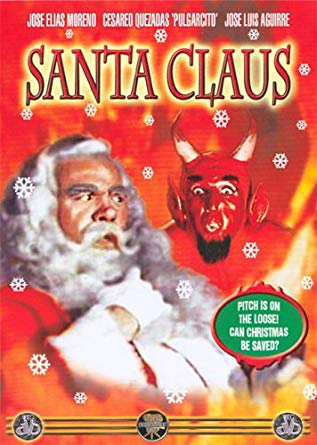
10) Santa Claus (1959): this film is nightmare fuel, made on a shoestring budget. It is very weird and the best part about it is that it was meant for children https://www.youtube.com/watch?v=jVO4ZRpTiaw&t=3547s   

9) Jack Frost (1997) and Jack Frost 2: Revenge of the Mutant Killer Snowman (2000): These movies are based on a Freddy Krueger concept. #2 is a campy and embraces it, but #1 tries too hard and has an indefensible rape scene. 

8) Silent Night, Deadly Night (1984): No list would be complete without this iconic experience of murder by a deranged killer, whose parents were killed by someone in a Santa suit when he was a kid.

7) Krampus (2015): This movie is fun, but director Michael Dougherty holds back in comparison to his 2007 classic Trick r’ Treat. I wish he had done more with this concept and budget. Still, it pioneered a new subgenre of Krampus films – Anti Santa – yet is not my favorite from said genre. 

6) Santa’s Slay (2005): Once you hear the title you know the movie: Santa goes on a naughty killing spree. It knows what it is: a camp fest.

5) Rare Exports: A Christmas Tale (2010): This film would be ruined for you if I try to explain it. Just know that it is a weird Finnish film about the discovery of a feral old Santa.

4) Better Watch Out (2017): This is a very weird and experimental HOME ALONe styled film, but the boy is not Kevin McCallister; he is a psychopath with the goal of committing the perfect crime.   

3) Black Christmas (1974): This film inspired John Carpenter’s iconic game-changing slasher flick Halloween (1978), and it is very much styled in the same way: POV opening, holiday setting, unknown killer (not a whodunit), strong final girl (which was not very common at that time), and a chilling soundtrack. It has also inspired Wes Craven’s Scream (1996) because the concept of a killer using a phone to taunt their victims is originates here. 

2)  Gremlins (1984): For Christmas, Billy Peltzer receives a cute furry creature that becomes a havoc-wreaking monster if you disobey these three rules: 1) keep them out of the sunlight, 2) don’t get them wet, and 3) and never ever feed them after midnight. When little kids went to the theater to see this movie thinking it was a fun animal Christmas adventure, they came out mortified by what they had witnessed, and this is one of the reasons why the MPAA added PG-13 to the rating system. 

1)  Christmas Horror Story (2015): This is the Trick r’ treat (2007) of Christmas movies and confirms your worst fears of Santa with its warm imagery and its nihilistic twist.

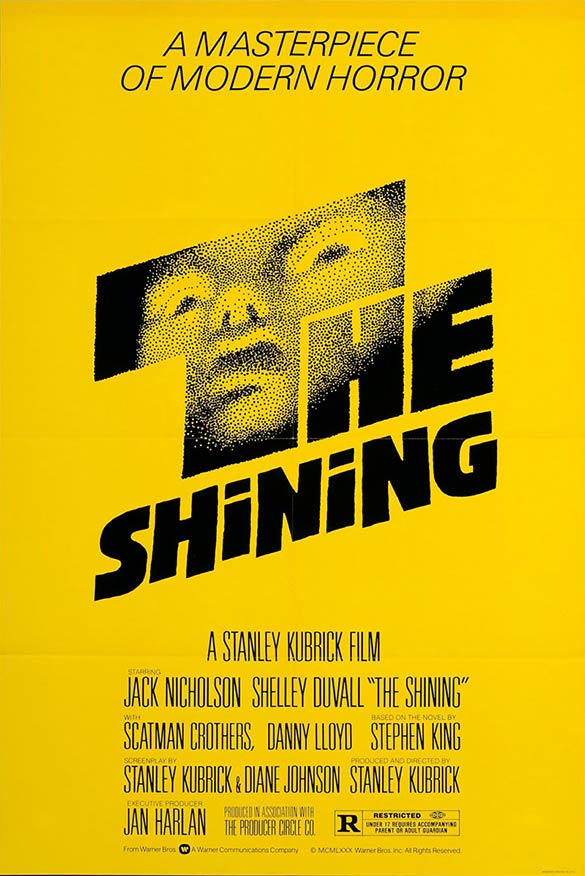
THE SHINING REVIEW “𝓬𝓸𝓶𝓮 𝓹𝓵𝓪𝔂 𝔀𝓲𝓽𝓱 𝓾𝓼,”

Stanley Kubrik’s adaptation of Stephen King’s novel starring Jack Nicholson and Shelly Duvall, originally blasted by critics, has come to be regarded as a masterpiece because of its overarching themes of abuse and domestic violence. The Shining is one of the most haunting films of all time because of how isolated it makes you feel. The film draws you in so that you as the audience believe that you are in Swindler, Colorado with the tormented Torrance family.     

THE OPENING

The opening sequence in The Shining is haunting, visionary and masterful. When I think of the opening scene, I immediately think of the soundtrack, written by Wendy Carlos and Rachel Elkind. This theme is composed of long haunting notes in different keys. The music is adapted from  “Dream of a Witches’ Sabbath” from Symphonie Fantastique by Hector Berlioz. The draining non-melody drags on and is paired with a shot of a yellow car slowly moving along a vacant highway. The highway runs through raw wilderness and there’s a sense of isolation. The helicopter shot is a precursor to the drone shots of our time. The theme and the shot really lure you into the movie. This mirrors the action on screen, as Jack Torrance willfully drives into the deathtrap of the Overlook Hotel, where he and his family will spend the winter alone. The whole sequence suggests that the Torrance family is the next in line to be tormented by the spirits that haunt the hotel. This is reflected when in Doctor Sleep (2019),when Danny returns to the Overlook. The movie recreates this iconic opening scene shot-for-shot, and the iconic theme song will haunt the movie and filmgoers even after the final credits roll.

JACK NICHOLSON’S PERFORMANCE 

Jack Nicholson has done everything. He’s been the president. He’s been the Joker. He’s been cooped up in an insane asylum. He’s been a private detective. And in his best role, he is possessed and tries to kill his family. In The Shining, Nicholson is terrifying as Jack Torrance. 

His performance in The Shining is one of the scariest performances ever. Jack Torrance is a recovering alcoholic with a history of domestic abuse. He’s also a writer with a short temper, who has been hired to act as the winter caretaker of the Overlook Hotel in Swindler, Colorado. Jack Nicholson plays the role masterfully that it makes me wonder what the actor was going through during the filming of this movie.

Look at this video of Jack Nicholson warming up for this role. What do you see? I see an actor who has taken method acting as far as it can go. Jack is jumping around with a real ax, shaking and muttering furiously about how he is going to kill anyone he comes across. It’s hard to understand his “words,” but it sounds like he might be saying “ax murder kill them” or “ax murder killer.” What’s shocking is that he is the same person in the movie and on the set. Jack Nicholson is Jack Torrance. When he says “come on Jack”, he seems to have channeled and given over to the spirits in the movie.

It is disturbing to see a human being go that far. Whenever you see him on screen, it makes you feel uncomfortable. There’s something about the look in his eyes. It always seems like he’s staring past your eyes and into the darkness in your soul. The expression on his face is truly evil, and it shows pleasure in wreaking havoc on his family. It’s almost as he’s looking into the darkness inside all of us. 

KUBRICK’S LABYRINTH  

The Overlook Hotel is iconic and Gothic. It is one of the most horrifying things in film history. I believe it was constructed to remind the viewer of the inescapable quality of pure evil. The Overlook feels like a never-ending maze. In the scene where Danny is scooting in the halls of the Overlook, he rides in a “circle” but he doesn’t end where he began. It’s as if the Overlook has abducted Danny. When he turns the final corner, he sees the ghosts of the Grady twins begging him, “Hello Danny. Come and play with us. Come and play with us, Danny. Forever… and ever… and ever.” But Danny has a very powerful version of the titular gift—“the shining”—which means that he has psychic abilities ranging from getting a good grade on a test he did not study for to clairvoyance and telepathy. Because of this, he is able to see and resist the spirits that haunt the Overlook Hotel. His father Jack Torrance is not that lucky. 

The hotel has the power to control people like it manipulates the ghost of Charles Grady (and will come to manipulate the ghost of Jack Torrance in Dr. Sleep, 2019). I believe this detail of the hotel trying to abduct Danny is Kubrick telling the audience what will happen to Jack. The depiction of the Overlook is a reflection of Kubrick’s pure and simple genius. Everything in the movie—from the wardrobe to the props and paintings—is purposeful. All of these calculated decisions tangle together and make an inescapable labyrinth of thought. This is shown both figuratively and literally. Outside the Overlook Hotel, there is an enormous hedge maze that has been infinitely referenced in pop culture. Kubrick chose to replace the topiary animals of Stephen King’s original book because the CGI technology of that time was not great and it would look like a total joke. In one of horror’s most defining conclusions, Danny lures Jack into the hedge maze, loses him in the bushes, and uses his shining to navigate out of the torment. In the end, Jack gets trapped in a horrifying situation of his own contriving. He is literally frozen in time.  

 The interior set of the Overlook and the hedge maze makes the audience feel that they too are lost in the horrifying snowy grounds.        

THE DEVIL IS IN THE DETAILS

Kubrick was notorious for his direction style and the way he treated his actors on set. He would use any means to get the performance he wanted. The most famous example of this was the way he “tormented” Shelly Duval in order to extract the feeling of pure fear and horror. In the book The Complete Kubrick, Duval says “Stanley pushed me and prodded me further than I’ve ever been pushed before.” The famous scene in which Wendy is trying to fend off Jack with a baseball bat on stairs reportedly required 127 takes, which left Duval exhausted and mentally unstable. But by tormenting Duval, Kubrick managed to capture one of the most emotionally distraught scenes in cinema history. 

Perhaps the most unsettling image in the whole film occurs towards the end as Wendy is navigating the labyrinth. She runs up the stairs, looks into a room, and sees something indescribable: a creature in a bear suit and mask, performing a sexual act with a man in a tuxedo. Wendy and the creature make eye contact, the shot zooms in on the beast’s face, and the audience cannot imagine who or what could be behind his impenetrable mask. Because Kubrick offers no explanation, the audience is left to fill in the blank. It is like a terrifying Mad Libs. It gives you the feeling that you are imagining the whole thing.

Things that are omitted are unsettling, and Kubrick built his whole career on not explaining things to the audience. He keeps secrets from the viewer. I think that we will never solve the puzzles in his films, most especially in The Shining. The day we do figure out what Kubrick meant in this film is the day we attain his unattainable mastery. And this will never happen because Kubrick’s genius was decades ahead of his time. When you compare The Shining to other films from the 1980’s it pushes the limitations and transcends the status quo of the era. The Shining is so good that it sets the tone for decades to come

VERDICT

Overall The Shining is my favorite horror movie and is horrifying on all the right levels. It is suspenseful, psychological, intense, and intelligent. Even if the ghosts in The Shining are not real, Wendy and Danny are still haunted by Jack Torrance’s alcoholism and violent tendencies. This relates to Wendy and Danny’s feelings of dread, isolation, and intimate contact with their tormentor. The film captures the feeling of unease, the feeling of not knowing if you’ll ever escape. And all of this is closed with a shot of a  photograph of Jack in the gold room with the caption Overlook Hotel July 4th Ball dated 1921, this reflects that after Jack’s death in the hedge maze he is immortalized as another spirit of the Overlook Hotel. Jack’s open arms in this image is as if he is welcoming you into the horrors that have taken place that cursed winter. This image will be burned into the heads of viewers forever. It has been dissected and analysed hundreds of times, but my view of this shot is that it is Kubrick showing the audience that the answer to why Jack is exploited by the ghosts of the overlook was right under our noses the whole time. The last piece of the puzzle Kubrick created hidden in plain sight.


I WILL GIVE THE SHINING 10/10! “a masterpiece of modern horror.”