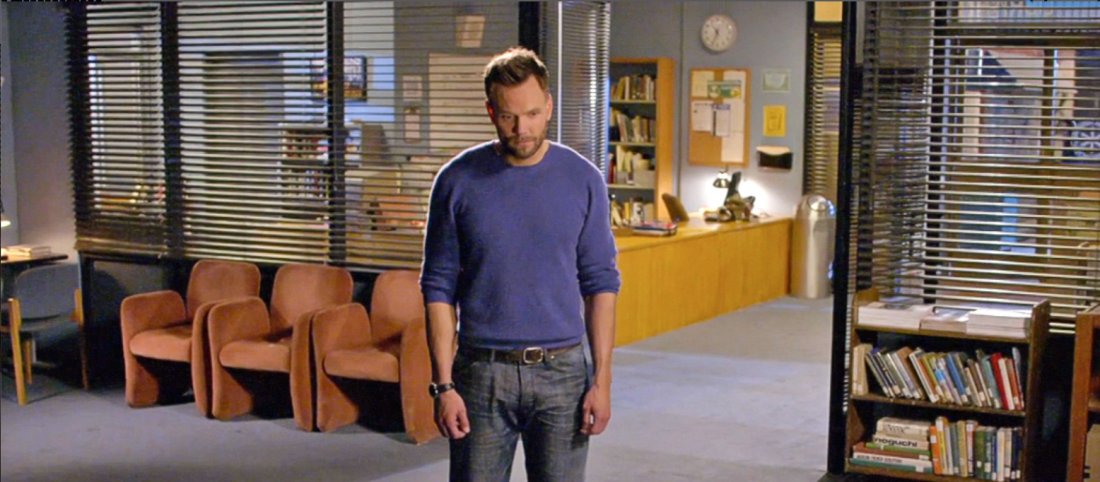
Community: A Perfect Ending

WARNING: THIS POST DISCUSS SENSITIVE TOPICS READER DISCRETION ADVISED

Most TV shows go on way too long and end up being disappointing or confusing. It’s way easier  to do a bad ending than to end a show appropriately. This is why there are so many terrible finales to beloved shows. But the ending of Community is the best finale of a sitcom that I’ve ever seen. It operates on a formal level and an emotional level, and the result is a satisfying conclusion.

At its core, Community is a very meta show, and the ending stays on brand. Most of the episode takes place in a bar where the study group meets to celebrate the end of the semester and the fact that they have saved Greendale Community College. In this episode, the characters know it’s the finale, but they afraid of the future, so they play a game of imagining scenarios for a hypothetical season 7. Each character send-off is the pitch that they make for season 7, and each pitch reveals details about the characters.

Community is very much a show about confronting morality, and this is also shown in the series finale. Behind the pitches, is the character Jeff confronting that his community is maturing and leaving. In Season 1, Jeff’s goal was to get his bachelor’s degree in law and move back to being a lawyer again, but in the finale, he realizes that he will forever remain a teacher at this community college as his community drifts away, and this really gets to him physiologically.

The meta nature of the show continues in the finale with the characters acknowledging the theme song. For such a silly show, the idea of the theme song ringing through Jeff’s head is very unnerving, and the repetition of the theme song calls into question the existence of the show itself—

“I can’t count the reasons I should stay 

 One by one they all just fade away”

When Jeff hears that Annie is leaving, he hears the theme song ringing in his head as he imagines everyone leaving him behind and he questions the reasons he should stay and one by one they all just fade away. Jeff knows he missed his chance with Annie so when she moves he pitches to himself a world where Annie is his wife and they have a son, this dream falls apart on him when he realizes that he doesn’t know what she wants.
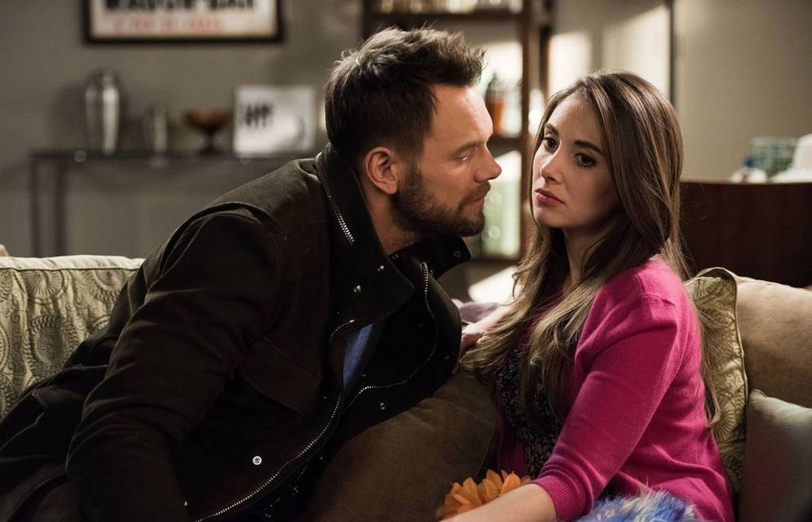
Community Finale: Dan Harmon on Jeff and Annie, Movie ...

Jeff realizes that even Abed—the character obsessed with being in a TV show—will leave him behind. Abed looks at life through a meta-lens, so when he moves on and develops as the show goes on, Jeff is confused and continues to see him still as the meta television-obsessed kid as he was in Season 1, but in the finale it’s clear that Abed is moving on and starting his life. 

The audience is a character in most sitcoms, and at the end of most sitcoms, it often feels like you as an audience member are being left behind while the characters go on to do bigger and better things. But with Community, it is the character Jeff that gets left behind while the audience and other characters move on and move forward. 

Their work is done, and Jeff realizes that he will be the last to leave and move on. The last thing  that Jeff says to all his college friends is “I love that I got to be with you guys, you saved my life and changed it forever. Thank you.” Even though this is Jeff’s last verbal statement when he is saying goodbye to Abed and Annie at the airport, he hugs Abed twice, and I believe this is his way of saying thank you. In the pilot, Abed invites everyone to the study group and tricks Jeff into becoming a better person. Because of this, Jeff owes his life to Abed. In the first episode, Jeff dismisses Abed and wants him to leave in the finale he is thankful he stayed. When we first encountered Jeff, he was a terrible and manipulative person, but through the study group has a grown to be a better person. 
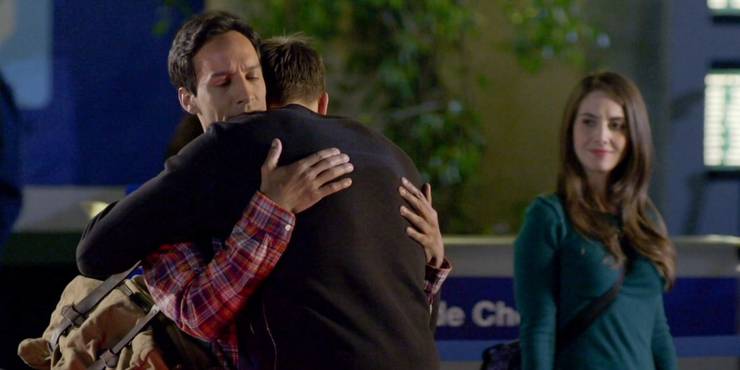
5 Times Community Was Heartwarming (& 5 Times It Was Sad)

And the song that plays in the last scene shows Jeff wanting time to stop and for the show to go on. 

“Oh, there’s a river that winds on forever

I’m gonna see where it leads

Oh, there’s a mountain that no man has mounted

I’m gonna stand on the peak

Out there’s a land that time don’t command

Wanna be the first to arrive

No time for ponderin’ why I’m-a wanderin’

Not while we’re both still alive”

Jeff’s dilemna is a mirror of creator and writer Dan Harmon’s internal state. The episode tag is a commercial that displays the cynical view that life is a game and that we are not created by God but instead by a cosmic joke. The discretionary warning, voiced by Dan Harmon, quickly turns into a meta-emotional-breakdown.

Dice not included, some assembly required. Lines between perception, desire, and reality may become blurred, redundant, or interchangeable. Characters may hook up with no regard for your emotional investment. Some episodes too conceptual to be funny, some too funny to be immersive, and some so immersive they still aren’t funny. Consistency between seasons may vary. Viewers may be measured by a secretive obsolete system based on selected participants keeping handwritten journals of what they watch. Show may be cancelled and moved to the internet, where it turns out tens of millions were watching the whole time. May not matter. Fake commercial may end with disclaimer gag which may descend into vain Chuck Lorre-esque rant by narcissistic creator. Creator may be unstable. Therapist may have told creator this is not how you make yourself a good person. Life may pass by while we ignore or mistreat those close to us. Those close to us may be those watching. Those people may want to know I love them but I may be incapable of saying it. Contains pieces the size of a child’s esophagus. —Dan Harmon (last scene of Community)

This ending takes the sitcom mold and snaps it with the inevitability that time will move on. As I realize that I have to move on and grow up, I identify with this ending greatly. You make friendships and relationships over a few years and then you have to move on. My favorite endings are bittersweet endings because they replicate the bittersweet qualities of life.

In the end, life goes on.

#sixseasonsandamovie
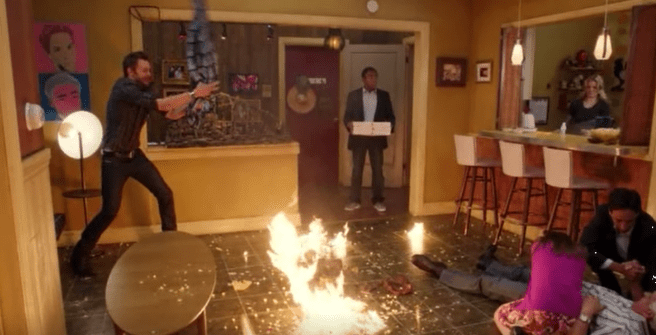
Best Of Worst Of: Community

TV shows are uneven, and at certain moments, the quality dips. If someone turns on the TV and happens to catch a bad episode, they’ll be turned off to the whole show, and vice versa. I want to analyze this phenomenon and compare the best and worst episodes of the same show to demonstrate how wonderfully inconsistent TV can be. 

Community ran from 2009-2015, and it always stood out as a subversive parody of sitcoms. Many episodes went over budget to the point of cancellation in 2014 before the show was revived by Yahoo Screen in 2015. The show stars Donald Glover, Joel McHale, Danny Pudi, Alison Brie, Yvette Nicole Brown, Gillian Jacobs, Ken Jeong, Jim Rash, and Chevy Chase. This show takes place in a Colorado community college but it is actually a parody and study of the tropes of the TV and film that came before it. In this inaugural edition of Best Of / Worst Of,  I will be comparing “Remedial Chaos Theory” (best episode) and “Intro To Felt Surrogacy” (worst episode), two drastically different episodes in quality.  

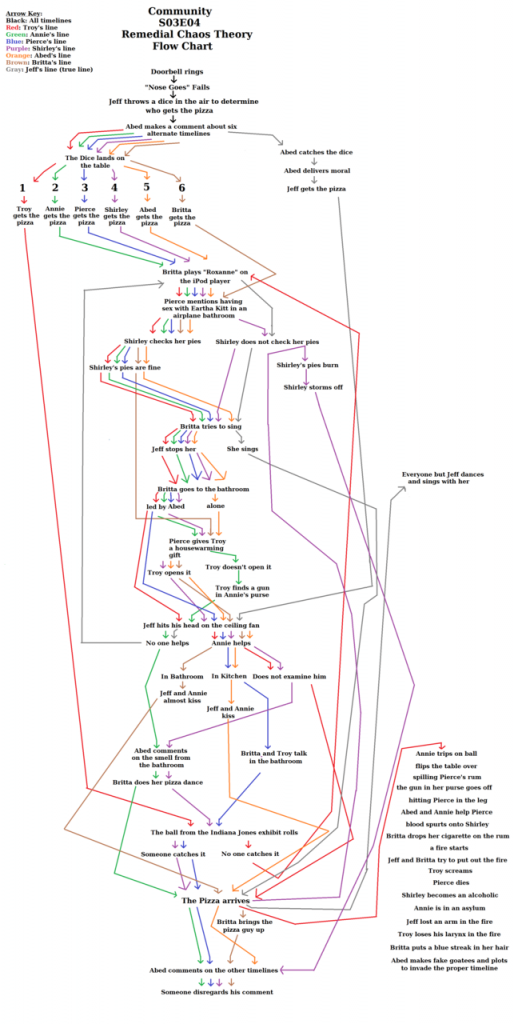
“Remedial Chaos Theory” (S3E4) is brilliant. It is about a housewarming party for characters Troy and Abed, but when the pizza is delivered downstairs, Jeff throws a die to see who will answer the door, and the story splits into six different timelines. In every timeline (except for the sixth), we see little inconsequential details that all blend together, and in the sixth and darkest timeline we see these details come together in such a way that everything that could go wrong, does go wrong. This creates many Chekhov’s guns that fire in various other timelines. It is a masterclass in storytelling. It is a shame that an episode like this was not appreciated at the time of release. This episode is a 10/10.

The central message of the episode might be that we are all operating within a framing device 

https://www.pinterest.com/pin/162059286561202756/

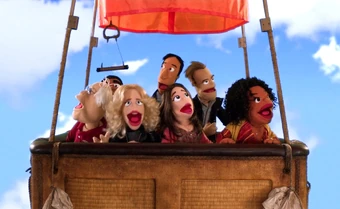
“Intro to Felt Surrogacy” (S4E9) is terrible. It is about the study group experiencing an awkward moment. When the dean notices that they are behaving strangely around each other, he makes them participate in puppet therapy, and a Sesame Street-style puppet show starts. They go on a hot air balloon for some strange reason and crash, eat drug berries in the jungle, and tell each other their darkest secrets. In the end, nothing changes. It’s alarming how this episode has no logical plot and just seems to be an excuse for Community to do a puppet episode. This is one of the worst episodes of television history. This episode is a 4/10.    

Intro to Felt Surrogacy | Community Wiki | Fandom

Community is usually very good, but if you watch “Intro to Felt Surrogacy” you will not be impressed. This is true with all television and it is fascinating to see the differences between a good episode of television and a bad episode of television. “Remedial Chaos Theory” (Best Of) and “Intro to Felt Surrogacy” (Worst Of) are the perfect examples.

The Office Analyzed: Season 2

In Season 2, The Office finally finds its groove. You can think of Season 1 as a six-episode mini-series, and Season 2 as when The Office (U.S.) really begins. The writers responded to fair criticism of Michael Scott’s character and the bleakness of the work environment. British audiences could handle something that depressing, but American viewers demanded something more light-hearted. Thus the writers reimagined the character of Michael Scott with two rules: 1) make Michael 10% more likable and 2) make the other characters treat Michael 10% better. The result is a successful character makeover which is also apparent in the way Steve Carrel is styled. In season 1, Michael has a combed back stringy hairdo, a fake bald spot, and a tightened collar that creates an appearance of a double chin, but the rest of his clothing is oversized to make him appear overweight. But in Season 2, his hair looks great and his clothes fit him well. This makeover is also in the writing, his character takes on greater dimension. This is evident in certain episodes like “Office Olympics” (S2, E3) when Michael goes out to buy his condo, the rest of the office plays games while he is gone. Jim hosts a closing ceremony and awards Michael with a gold metal for closing the deal on his condo. The last shot of the episode is Michael crying because he thinks he is finally being recognized for all his hard work he has done for the Dunder Mifflin Scranton branch. And at this moment the ensemble cast recognizes Michael as their leader.

The ensemble cast is what holds this show together, they are witnessing Michael grow just like the audience. Just like Michael the ensemble develops as a whole and gels with each other to propel many storylines further later in the show. Even though I find Michael’s maturation to be the most interesting element of the series, Season 2 is mostly focused on the love story between Jim and Pam with the antics of boss Michael Scott gluing the story together. Michael has a strange experience with his superior Jan Levenson, which damages both careers. This is very recognizable in the standout episode “Casino Night”.        

 In the episode, “Casino Night” the whole story of season 2 crescendo into a laugh filled heartwarming season finale. This episode continues Michael and Jan’s relationship, Jim Confesses his love for Pam, and gambling related antics happen. This episode is the beginning of a drama filled love story that is continued in season 3, this episode reinforces the new Michael as a “Hero”. This episode is summed up by something Michael says, “Love triangle. Drama. All worked out in the end, though. The hero got the girl.”  

In my mind there are no bad episodes of Season 2, but here is my ranking:

22) The Carpet (S2 E14)

21) The Secret (S2 E13)

20) Michael’s Birthday (S2 E19)

19) Take Your Daughter To Work Day (S2 E18)

18) Performance Review (S2 E8)

17) Valentine’s Day (S2 E16)

16) Boys and Girls (S2 E15)

15) The Fight (S2 E6)

14)  Dwight’s Speech (S2 E17)

13) Christmas Party (S2 E10)

12) The Fire (S4 E4)

11) Sexual Harassment (S2 E2)

10) The Client (S2 E7)

 9) Office Olympics (S2 E3)

 8) Booze Cruise (S2 E11)

 7)  Drug Testing (S2 E20) 

 6) Conflict Resolution (S2 E21)

 5) Email Surveillance (S2 E9)

Michael realizes that he can read his employees emails and sees that he was not invited to Jim’s barbecue. Also Michael does improv with Ken Jeong.

4) Halloween (S2 E5)

Michael has to let someone go by the end of October, of course Michael waits until halloween. Michael fires someone in costume.

3) The Dundies (S2 E1)

Michael hosts an award show for his employees and he crosses the line. This is the first time Michael is humanized by having hecklers make fun of him and you actually feel for him.

2) Casino Night (S2 E22)

This episode is the standout but is not the best of the season, Michael hosts a charity casino in the warehouse and many big things happen between main characters (Mostly Jim and Pam) and it is basically a perfect storm of drama comedy and intrigue.

1)  The Injury (S2 E12)

Michael burns his foot on a grill and pretends to be handicaped. Michael’s overreactions make this episode the best of the season and one of the best of the show.       

The Office Analyzed: Season 1

I’ve grown up watching The Office, and its sense of humor has definitely rubbed off on my generation. It has resonated with audiences because of its depiction of humanity and wholesome themes surrounding a mid-range paper supply firm in Scranton, PA. It has deeply affected media, television, and film because of its Mockumentary format, which has been copied but never successfully duplicated. Even though the series finale aired in 2013, it is still like comfort food; the events transpiring today are unbelievable, and booting up an episode of The Office is an easy escape.        

Season 1 of The Office (U.S) is known as one of the most controversial seasons of comedy on television, mostly because of the way they duplicated Ricky Gervais’s classic 2001-3 comedy of the same name. The direction did not know what it was doing, and the characters, scenarios, and relationships were ripped off and hadn’t found their own voice. This is especially seen in the way Michael Scott (Steve Carrel) is portrayed. He is racist, misogynistic, and unapologetic for his actions. This is because Ricky Gervais’s portrayal of David Brent, and that character is unaware of how bad he actually is. Throughout the season Michael is consistently offensive to women and minorities, but most of these aggressions happen in the standout episode “Diversity Day” written by B.J Novak.     

Diversity Day is about a person from a fictional company who comes to Dunder Mifflin for sensitivity training in response to an offensive comedy routine by Michael Scott. Michael then feels like he is being portrayed as the villain in this situation so he starts his own company and chaos breaks in the Dunder Mifflin Scranton branch. Michael thinks it’s a good idea to tape index cards to the employee’s heads with races, ethnicities, sexuality, and gender. What ends up happening is that Michael overstays his welcome and loses any respect he once had from his subordinates.            

In Season 1, Michael’s stupidity is the butt of the joke, and his character is one-dimensional; he’s just the man in charge who everyone hates for good reason. In subsequent seasons, the focus shifts to his immaturity, lack of awareness, and the childlike wonder of his character. 

One of the best things about Season 1 is that it’s not that long. Most of it is a slow burn with some moments of chaos. Season 1 is vastly different from any other season of The Office. The other seasons are goofy; Season 1 is an anomaly and is not in tune with the rest of the series.

All Office Season 1 episodes ranked from best to worst: 

6) “Pilot” 

The Pilot introduces Michael, Pam, Jim, and Dwight and the rest of the cast in a remake of the Ricky Gervais (U.K.) Office’s first episode. It has the same jokes and character introductions, and it is only here to tell people who the characters are. 

5) “Hot Girl”

An attractive saleswoman comes to Dunder Mifflin, and many of the male staff members try to catch her attention. It is very cringy as Michael and Dwight try to impress her. The titular “hot girl” is played by Amy Adams in this awkward season finale.

4) “Health Care” 

Michael places the responsibility of choosing the office’s health care plan in Dwight’s hands. He starts pressuring his co-workers to tell them their diseases and medical history. Jim and Pam realize this is a great opportunity to mess with Dwight. This episode has some amazing jokes.

3) “Basketball” 

Michael challenges the warehouse to a basketball game to prove that the upstairs people are cool. There is a bet involved: the winning floor gets to stay home on Saturday. This episode is a fan favorite, but I am not the biggest fan of sports, so it’s not my favorite of the season. Still, it has a lot of great lines and jokes that are unique to the episode.  

2) “The Alliance”

Dwight invites Jim into an alliance to protect them from downsizing. Jokingly, Jim agrees just to mess with him. This episode is the goofiest of the first season and is pretty fun to watch. This is an episode that I watch frequently because of its feel-good nature.

1) “Diversity Day”  

After an unsuccessful comedy routine by Michael, Dunder Mifflin sends a sensitivity trainer and Michael hijacks the session and starts his own company. This results in one of the most famous sequences in comedy history. Go watch it.