
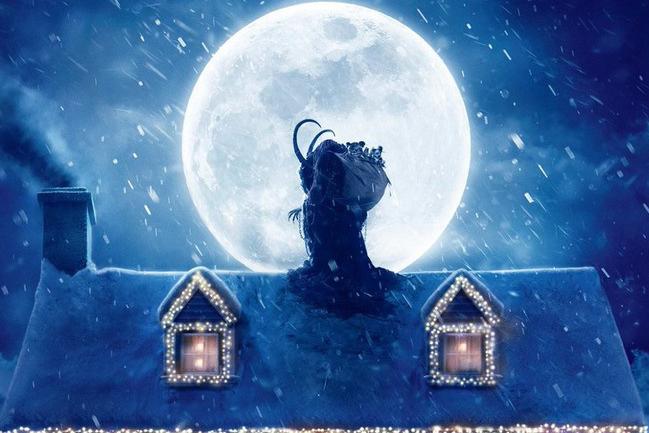
For me, Christmas is scarier than Halloween. Everyone knows that Halloween is scary, but Christmas we’re told is the jolly, which, of course, inspires the most twisted minds….
There is something terrifying about the prospect of Christmas because it is a time in which everything is supposed to be good. It is a time of happiness, togetherness, gifts, merriment. It’s one of the best holidays in that sense. The way Christmas horror movies get you is through the distortion of purity. You don’t expect something bad to happen in that context. That’s why Christmas horror movies are especially effective and unique.
Christmas Horror Aesthetic

Filmmakers know that sound design can make or break a movie. Directors can take something—like “Carol of the Bells”—and contort it until it’s something out of your nightmares.
They also know that the absence of sound is as powerful as the use of sound, and they can use silence as negative space. On a normal winter night, the only noise you’ll hear is the crunch of snow, but the filmmaker knows the scariest part is not hearing a crunch, so you don’t know where the danger is coming from.
One of the best examples of this is the original Black Christmas. Before Bob Clark directed A Christmas Story, the classic Christmas coming of age tale of 1983, he made Black Christmas in 1974. Black Christmas was one of the very first mainstream North American slasher films and was created on a very small budget. Bob Clark had to make due with anything he had, and lucky for him, he had Christmas.
When we look at stills from Black Christmas, we see a lot of negative space. That negative space is ominous and makes a regular Christmas scene scary.
In the first image, we see Peter, who is a red herring character and at this moment is being alluded to as a killer. So in your head, you see a killer who has been harassing these girls and ruining the Christmas spirit with all these acts of wrongdoing. And this disruption is visually shown through the juxtaposition of the Christmas tree and lights with the negative space with his body and the blackness of the night surrounding him.

The way the Christmas horror aesthetic works is through taking something innocent and contorting it until it becomes frightening.
Santa vs. Krampus
Santa as we know him was modeled and created in 1930 to sell Coca-Cola in the Christmas season. Because of this advertisement, the mainstream media portrays Santa as the embodiment of good, so we end up believing it. There are hundreds of movies where Santa saves the day because of this marketing, but Christmas horror upends what we see as good and what we see as bad.
In traditional Germanic folklore, Santa has a demon brother named Krampus and both figures embody justice, reward, and punishment. If you are good, Santa will give you the gifts you asked for. But on the other side of the coin, the risk with his brother is very high, and the reward is very low. If you are bad, Krampus will whip you with bundles of birch sticks and/or throw you into a bag and take you to a hellscape. In my view, Santa and Krampus are the same.

Traditionally Santa Claus was often depicted as a pope-like or clergy-like figure—indicating that he was close to God. And Krampus was depicted as a demon/devil. Now that Santa is not associated with religion, there is no need for a devil character. So now the Santa character that we have now both punishes and does good. It’s like Krampus and Santa have become one in our popular culture.
Now in modern Christmas horror, Krampus and Santa are interchangeable. They play the same role. You can look at this movie poster for Krampus (2015), you can see both iconography of Krampus and Santa to serve one purpose: to terrorize our imaginations.

What Christmas horror does is to strip the wolf of its sheep’s clothing—to reveal a darker truth: a Krampus inside the Claus
Conclusion
I’m not trying to deny the holidays are a good time, but the reason we see so many disturbing and scary stories told during this season is because of the reputation Christmas has. The choirs, the gifts, and the joy are all amazing things, but these things can also be exploited by creative minds. And that’s how you get a Christmas horror story, by twisted association.
 Levi Jacobson Reviews