Scream: “Not In My Movie”

an in-depth study of Scream
By Levi Jacobson

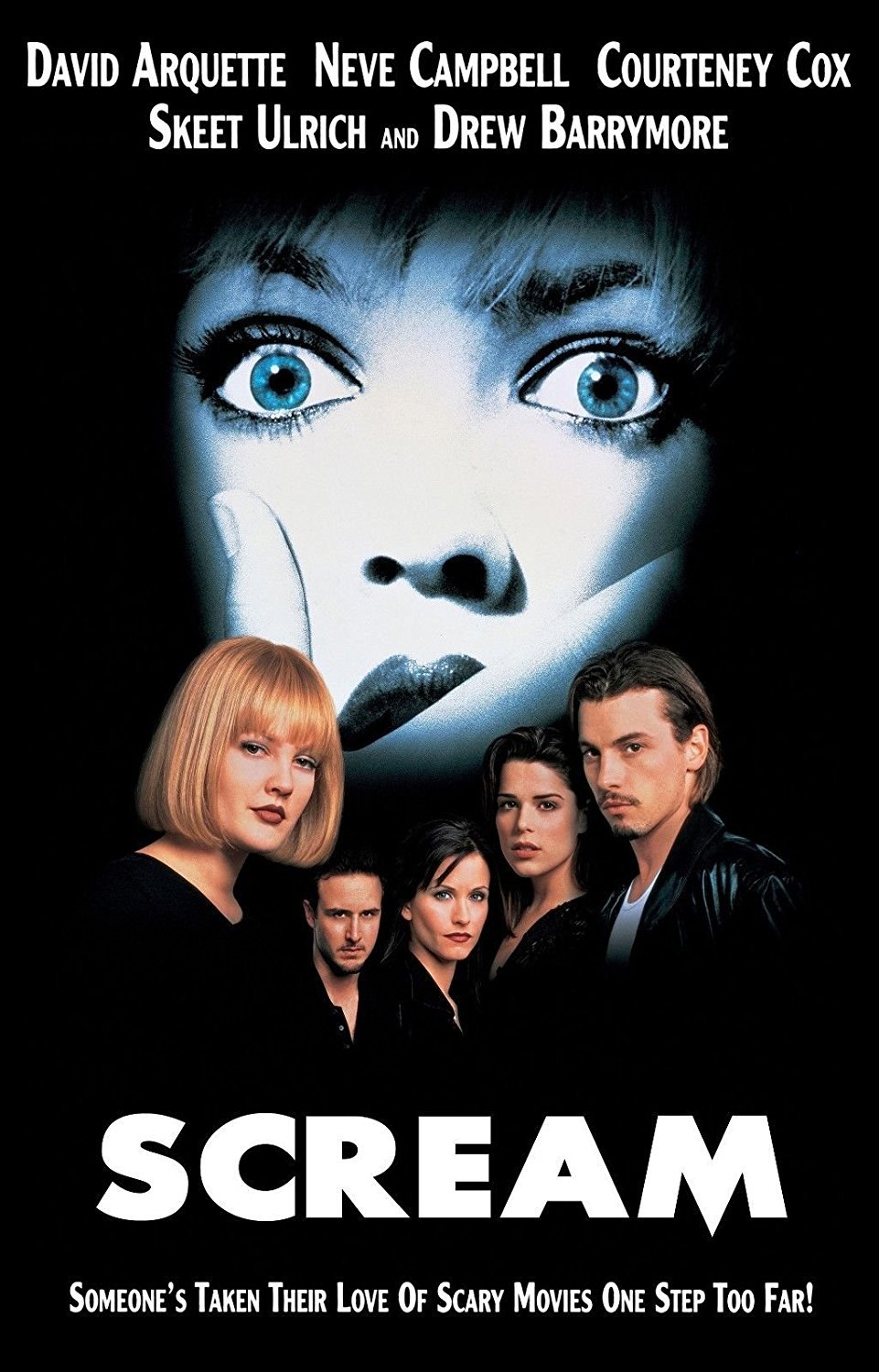
Not in my movie” is one of the most famous lines from one of the most famous horror franchises in cinema history. The seminal slasher film opens with a scene that redefines horror itself. Every trailer and poster promoting the film shows images of the actress Drew Barrymore, and the movie begins with her answering the phone. The audience expects her to be the “final girl” – the main character in a horror movie who confronts the killer and saves the day, but in Scream, Barrymore is disemboweled and hung from a tree in the first ten minutes. This is unexpected because it is very brutal and we are shocked that Barrymore doesn’t survive the first scene. This is one of the ways the movie tells us it is going to revolutionize the genre. Everything you need to know about the franchise – except the killer – is in this first scene. There is a murderer with a ghost mask and cloak who calls people, harasses them with trivia about the horror genre, and then kills them in a self-referential fashion. The Scream franchise – except Scream 3 – is a masterpiece because it blends true horror with amazing self-referential humor.

Each installment of the franchise adds to the web of meta-textual commentary. Scream 1 talks about how the horror genre is oversaturated and old, and, in so doing, it reinvents the horror genre. It argues that horror movies should be funny, hip, and most importantly meta. Scream 2   talks how “sequels suck!” and never get close to the brilliance of their predecessors. Indeed the film is full of flaws. For example, some scenes are superfluous and the killers don’t make sense. The film was rushed and way too long; however, these flaws build up and end up helping the film’s argument. Scream 3 attempts to investigate how the last installment of a trilogy goes back to the original movie and retcons important parts of the film, undermining character details that create inconsistencies in the overall storyline. In Scream 4, the franchize is redeemed. This installment comments on how bad reboots are, yet it is a great film because it returns to its roots by having the killers try to remake the original.

Scream 1 follows a town that has been terrified by a rash of killings. It follows final girl Sydney Presscot who has been tortured by the memory and trauma of her mother’s death and the murder of her friends. The cast of characters includes her father, her boyfriend Billy, Her best friend Tatum, Her friend Stu, local news reporter Gale Weathers and bumbling Deputy Dewey. No one knows the killer’s identity and the killer is fixated on Sydney. As the stakes get higher and people drop like flies, a curfew is enforced. Town Goofball Stu Macher decides to throw a huge party in his gothic mansion where the third act unfolds. After the news of the principal’s death, half the party leaves out of morbid curiosity. After this, a full-on killing spree ensues. There seem to be four suspects: Sydney’s boyfriend Billy Loomis, Stu Macher, Sydney’s Father and Randy Meeks. The audience expects the killer to be one of these four Suspects. We are shocked to find that it’s not only one killer but two. Both Billy and Stu worked together to kill all those people. The movie ends with the sun rising as Gale reports and tells the story as the camera zooms out and displays that gothic mansion.    

It’s an excellent film that’s truly frightening, but what makes this movie so special is its inclusion of meta-commentary. Meta-commentary is the art of referencing a medium whilst working within that medium. One way meta-commentary functions is when a film acknowledges the tropes of the genre it is operating in. Old Horror Films have a distinct and stand out way of being filmed and edited. It’s very choppy and shaky because most of them were made by amateurs. The way they were edited is very back and forth and the effect seems unintentional. Wes Craven consciously directs scenes as if they were from a low-budget slasher film. Likewise the writing comments on seminal films like the original “Friday The 13th” and their poor writing. Kevin Williamson writes a script that calls upon all of these cliches and ends up making a truly original cinematic experience. Some of the classic horror tropes he plays with are:

  1. The Final Girl
  2. The unkillable Killer who rises again
  3. The primal knife-like weapon
  4. Safety in numbers dangerous when splitting up  
  5. The Big House/Haunted house
  6. Exhilarating chase scenes
  7. Surprise twist ending

As we have seen the film uses all of these motifs to honor a “Low brow” Genre and elevate it to a new level of cinematic art.   

One of the most iconically meta parts of this film is Randy’s “Rules for Surviving a Horror Movie.”™

  1. Never have sex
  2. Never drink or do drugs
  3. Never say “I’ll be right back”

Immediately Stu–who turns out to be one of the killers–stands up and announces, “I’m getting another beer. Do you want one… I’LL BE RIGHT BACK.” This is one of the best scenes of the movie and perfectly demonstrates the meta-commentary at work in the script.

Other classic examples include the same painting within that painting, a story-within-a-story and of course a movie inside of a movie. There is  a mind-boggling level of meta-commentary in the scene “Jamie look behind you.” Randy, played by Jamie Kennedy, talks to a TV playing the horror film HALLOWEEN. He tries to warn Laurie Strode, played by Jamie Lee Curtis, about the killer being behind her. Meanwhile at the same time that he is saying “Jamie look behind you. Jamie turn around,” Ghostface is right behind him with a knife-raised about to kill him. These layers of meta-commentary are pushed to the extreme when you realize that actor who plays Randy’s name is Jamie; thus he is warning himself without realizing the killer is behind him. Thinking about how Kevin Williamson wrote the scene shows the pure genius of this self-referential masterpiece.

At first glance, Randy Meeks may seem like a minor character, but when analyzing further, we can see that he plays two essential roles: 1) he serves as a foil character to Billy and 2) he symbolizes the audience in the situation.

Randy and Billy are foil characters meaning they are complete opposites of each other.  Randy likes Sydney and Billy is Sydney’s boyfriend, and this alone sets them in conflict. Randy uses self-referential humor to save people and on the other side of the coin, Billy kills people with wit. Randy is the suspect, Billy is the Killer. Randy is the unpopular film buff and Billy is the cool oily guy most people are friends with. Randy has a Geeky vibe about him. Billy has an uncomfortable yet charming way about him. This means Randy might react to a situation differently to Billy. They act very differently from one another, Randy is calm in an “I got this under control” way, and Billy is calm in a psychotic terrifying way. This is why Randy is the subjectively best character in the series! The character Randy also plays an essential role in this film. He plays the role of the audience – he’s thinking what the audience is thinking and verbalizes it as he watches the horror unfold. In movies, the audience is its own character. in comedy, without the audience laughing it’s not a comedy. In horror, if the audience isn’t scared the effect of the horror is not accomplished. Aware of this, Kevin Williamson wrote Randy as a film buff – he knows the “Rules” of the genre and like him, the audience is aware of how not to die. The script has so many twists and turns and the audience is in a state of shock when the killer is revealed. In that sequence, Randy gets shot and you think he’s dead. At this moment, the audience is taken aback and can no longer follow the “Rules.” At this moment, it seems like Randy has been written out of the story, but when Randy’s “Rules” come back into effect when the killer rises again, Randy also rises. His authority comes back, and he warns Sydney about what is going to happen next. In this sense, the audience can relate with Randy because the audience also understands that this trope will reinforce itself.

Randy warns, “Careful this is the moment where the supposedly dead killer comes back to life for one last scare.” At this moment, Billy snaps back to life, but Sydney quickly fires the last round into Billy’s head. After this Sydney delivers one of cinema’s most iconic line: “Not in my movie.”

© Levi Jacobson with editorial support by Christine Gardiner 
Avenger’s Endgame: The Grand Finale

fi·na·le

/fəˈnalē,fəˈnälē/

noun

the last part of a piece of music, a performance, or a public event, especially when particularly dramatic or exciting.

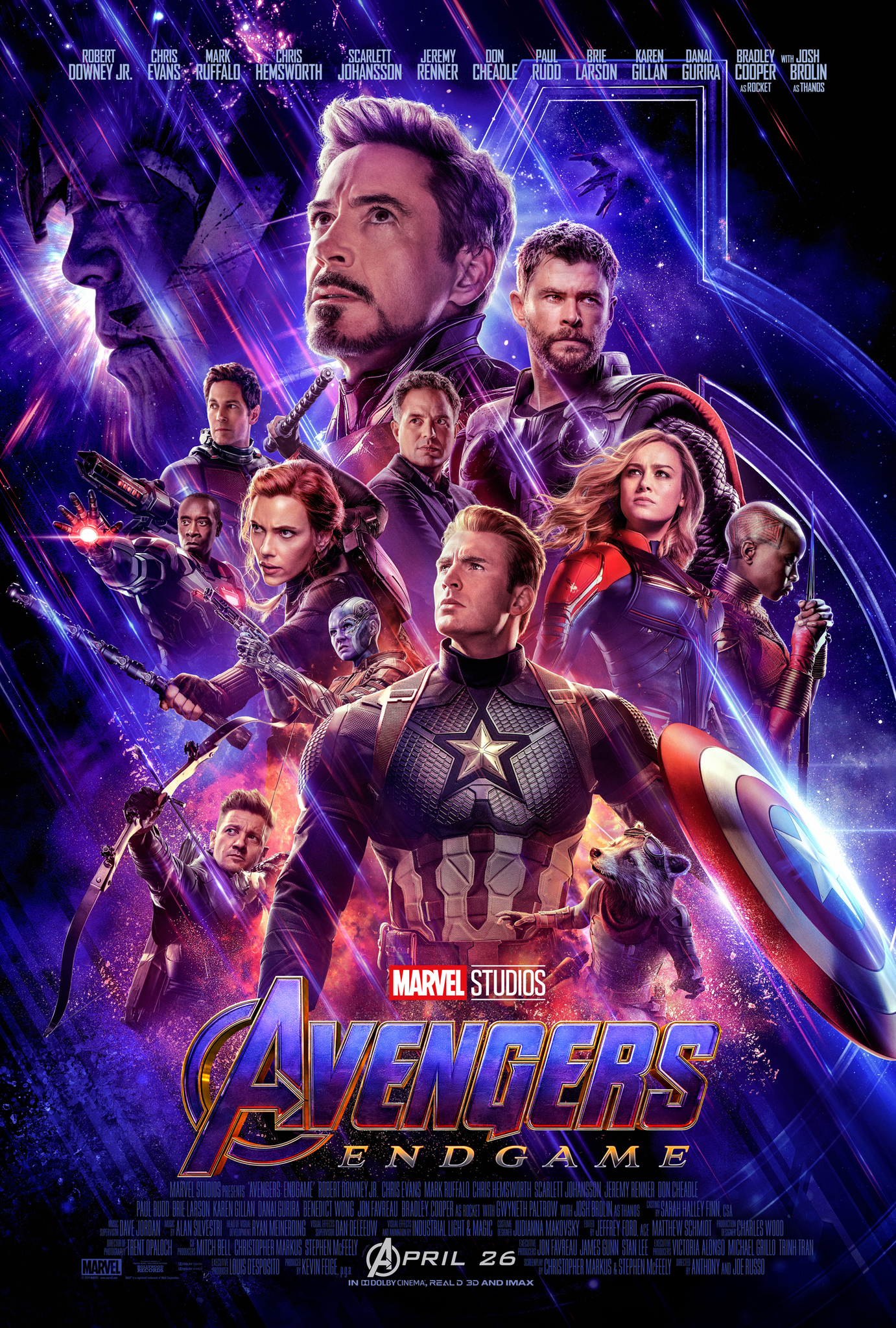
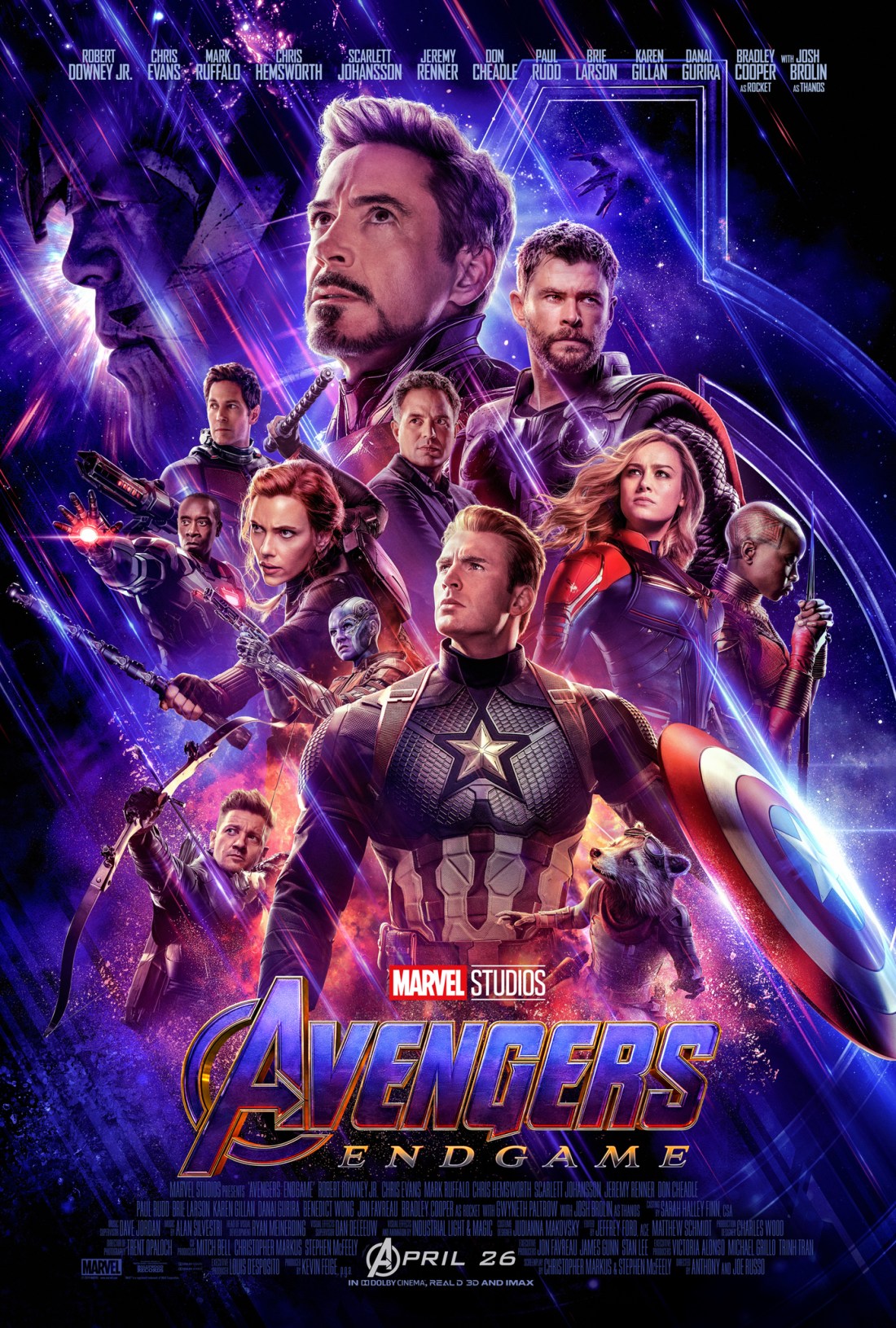
Avengers Endgame is the finale to 22 films since Ironman in 2008, and it is a damn good film of callbacks to the original movies (phase one) and uplifting storytelling.

I am going to organize this Avenger’s Endgame review into six relevant and important categories:

  1. The Comedy
  2. The Fan Service
  3. The Characterization & Performance
  4. The Action
  5. The Storytelling
  6. The Verdict

THE COMEDY

The Comedy is one of the best in the series. I would say the jokes are melancholy and sour at first, but then they just turn mean-spirited and realistic if you’ve ever gone through tragedy and loss, then you can understand the type of dry humor employed in this film. Antman (Paul Rudd) carries the comedy on his back for most of the movie with amazing jokes and delivery, I loved fat Thor (Chris Hemsworth) and how they turned the manliest character into a slob that plays video games, The contrast between the god and the goof is surprising and subverted expectations, Especially after watching Infinity War.  

For an action movie, the comedy is solid.

THE FAN SERVICE

Good fan service calls back to the original in a subtle way that rewards loyalty. This film does that almost perfectly. An amazing example is when they return to the attack on New York from Avengers 1. They reshot and overlayed footage from the 2012 blockbuster, filled with easter eggs and jokes for the fans. The amazing thing is that all the fan service in this movie makes sense in the context of the story. It never stops the pacing or slows down the movie. The movie also never jumps the shark. Everything feels grounded in the laws and realities of the Marvel Cinematic Universe (MCU), and the pieces of the story fit together perfectly. When I saw Captain America dancing with Peggy in the final scene, I was frozen because I was invested in the emotional payoff.

The fan service is AMAZING

THE CHARACTERIZATION & PERFORMANCE

Good performances have emotional weight, and this film is full of them. Karen Gillan has a very good performance as Nebula and plays two versions of her robot self. Mark Ruffalo has a very convincing performance as The Hulk, who after half the universe gets reduced to dust, integrates the Monster and the Man into Professor Hulk, a social media celebrity. Scarlett Johansson has a sad yet realistic portrayal of Black Widow.

Outstanding performances can carry a movie, and Endgame is no exception. Josh Brolin and Robert Downey Jr. are two of the best actors I’ve seen in the last ten years. Josh Brolin plays the infamous Thanos, and Robert Downey Jr. needs no introduction as Ironman. I believe Robert Downey Jr.’s performance is Oscar-worthy because of the emotion it carries.

Overall, the characterization and performances are the best in the series.

THE ACTION

In an action movie, the stakes are high when anyone can die at any moment. This is true in Endgame. The film begins and ends with whole civilizations being wiped

out in acts of genocide. Also, major characters like Black Widow and Ironman, who we are deeply invested in, meet their untimely demise. This movie has consequences, and major characters are lost forever.

The whole final battle is breath-taking. Characters, who we thought were lost, come back for last epic fight. When I saw the film opening week, the audience literally cheered to see Spider-Man, Black Panther (and his army), Doctor Strange, and others reappear to take on Thanos and his massive army of Chitauri, aliens with laser weapons, who look great on screen battling the Avengers. The visual effects are excellent, and the choreography of the fight scenes is so natural it doesn’t look choreographed.     

The action meets and exceeds audience expectations.

THE STORYTELLING

In this movie every plot point is relevant. There are many details that demonstrate that these writers, unlike David Benioff and D.B. Weiss of Game of Thrones, had a plan from the start and a vision for the finale. For example, at the end of Ironman (2008), Tony Stark gives a press conference in which he admits, “I am Ironman.” This line then comes back at the very end of Endgame. When Thanos gets the gauntlet, he says, “I am inevitable.” Then Tony Stark steals the infinity stones, and his last words before he dies are, “I am Ironman.” This creates a bookend and a sense of closure.

In the movie, there is no retconning of any sort. The writers handle their decision with integrity. Even the time travel, which is almost always messy, is handled with class.

I liked the idea that even if someone dies in the past, the future will not be affected because when going to the past, the past becomes the present and the present becomes future, so “the present is going to stay the same regardless” of what happens during the time traveling sequences. Even if they wanted to, the Avengers can’t go back in time to kill baby Thanos or have Thor go for his head before he snaps. Instead, they have to find a way to get the infinity stones, recreate the infinity gauntlet, and make a new future.
From a business standpoint, the tangent timelines are a brilliant strategy, opening many avenues for prequels, sequels, and spinoffs for streaming services like Disney+ and Netflix.

In this movie no one is safe and everything is purposeful.

The storytelling is compelling and impactful.

THE VERDICT      

I don’t want to give this movie a grade. Slapping a number on it will only take away from the overall experience. Endgame is not a film; it is a pop cultural event. Everyone and their mother has seen it by now and references are permeating social media and the hallways at school. Last week a teacher at my school referenced Endgame by saying, “Math is inevitable.”


Endgame is definitely an inevitable part of pop culture today

Why US Works So Well

by Levi Jacobson

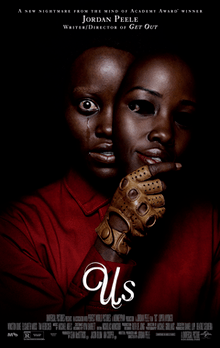
You might be excited for Jordan Peele’s new project US based on box office numbers alone, but other movies that have reached and exceeded that number ($173,980,920 at the moment) have not been as good (for example Scream 3, which grossed $161.8 million in its overall run). But US has grossed more than that in less then two months, and US is not Scream 3. It’s also not Get Out. To compare US to Get Out is to discredit both films because they are so different. It is like comparing The Sixth Sense and Unbreakable; it doesn’t make sense and its insulting to both films. US has “classic” written all over it, and Jordan Peele might just be this generation’s Alfred Hitchcock. Or maybe he’s just Jordan Peele, a term I predict is going to be used in future generations to indicate quality, originality, humor, and great direction. This film is OVERALL AMAZING.

This review will be split into five parts:

  1. The Scare Factor
  2. The Hilarity (the Jordan Peele-ness)
  3. The Direction
  4. The Plot
  5. The Verdict

THE SCARE FACTOR

I will start by saying this movie is scary as HELL, The doubles (the tethered) are very frightening, and the make-up on Lupita Nyong’o’s tether, Red, is Oscar-worthy and terrifying. The grunts the tethered make are unsettling and creepy. The incredible acting makes the tethered look and act like different people. The soundtrack is also a standout among other films of this genre. Especially the “I Got 5 On It (Tethered Mix from US).” In this film, I felt the most unsettled and uncomfortable since The Shining.  

I am going to give THE SCARE FACTOR a 10/10

THE HILARITY

I will start by saying this movie is very Jordan Peele, meaning it uses subtle humor that regulates and paces the funnies and frights. For me, the name Jordan Peele equals masterful comedy. This movie has great comedians Tim Heidecker (of Tim and Eric Awesome Show, Great Job! and Tim and Eric’s Bedtime Stories!) and Winston Duke, who both have perfect timing and delivery. And yes this movie is basically a horror flick with a strong dose Key and Peele humor in it. So the combination is amazing.

I am going to give THE HILARITY a 10/10

THE DIRECTION

This movie is incredibly well shot. If you saw Get Out, you know the type of direction Jordan Peele uses here. He has mastered the only showing what’s important but not being flashy and obnoxious technique only a few have perfected: Hitchcock, John Carpenter, Stanley Kubrick, and Wes Caven to name a few. But Jordan Peele has taken techniques from everyone and has mastered them.

I am going to give THE DIRECTION a 10/10

THE SCRIPT

The basic plot is an African American family goes to their summer home and encounters mysterious doubles of themselves. The meaning is ambiguous and thought-provoking. I would further dissect what makes the plot so good, but this would make my review full of spoilers, so just take my word for it.

I am going to give THE SCRIPT a 10/10

THE VERDICT

All the essential cinematic elements (such as the score, the screenplay, the acting, and the direction) factor into the verdict. In this film, all the elements–down to smallest detail like what movie is on the shelf and what commercials are playing on the screen–are successful and intentional. The result is an amazing blockbuster film that conveys the message that we are own worst enemies. All and all, this movie was a blast and I would recommend this to anyone who is a fan of art, media and/or film.

I AM GOING TO GIVE US A 10/10